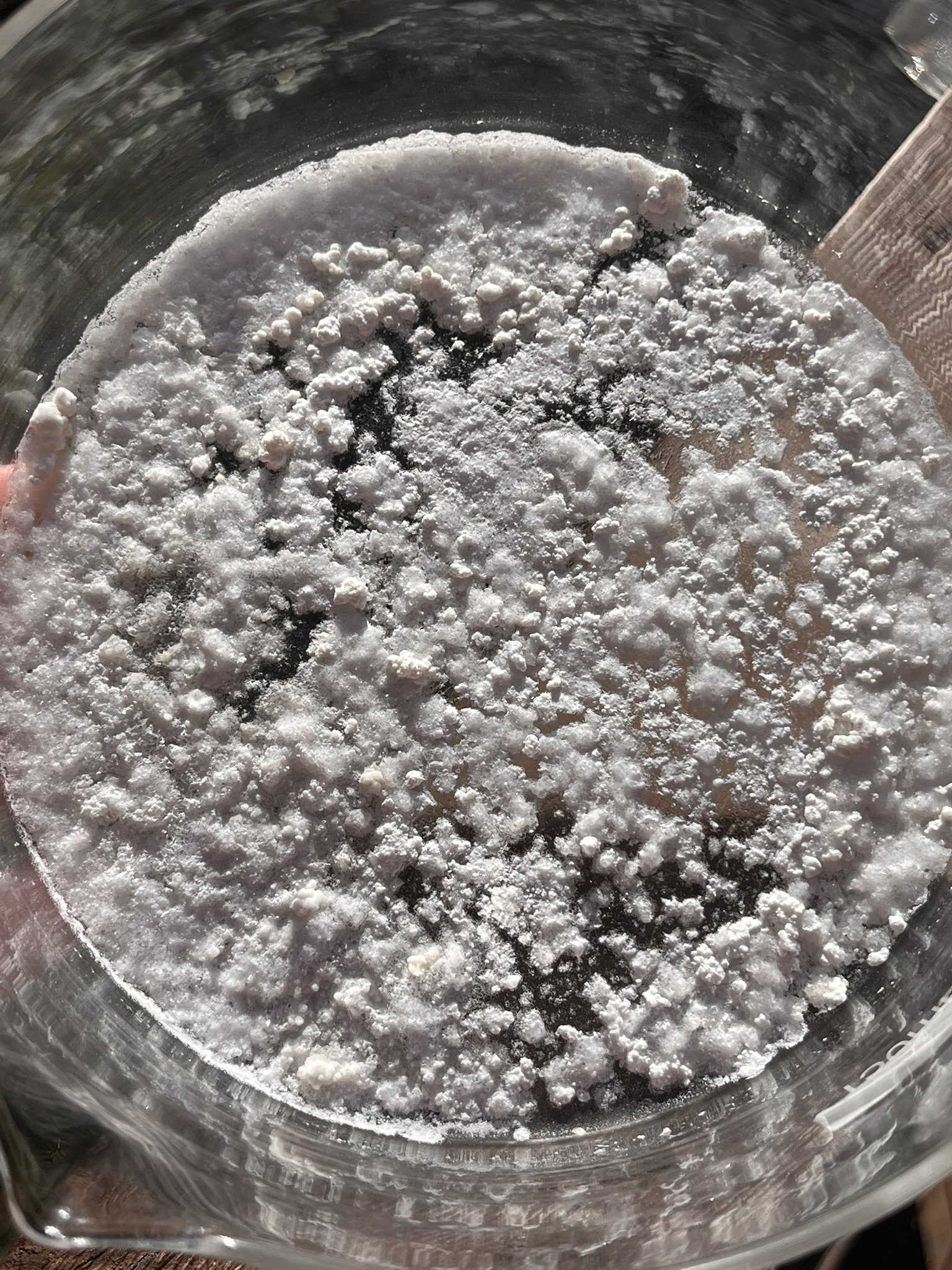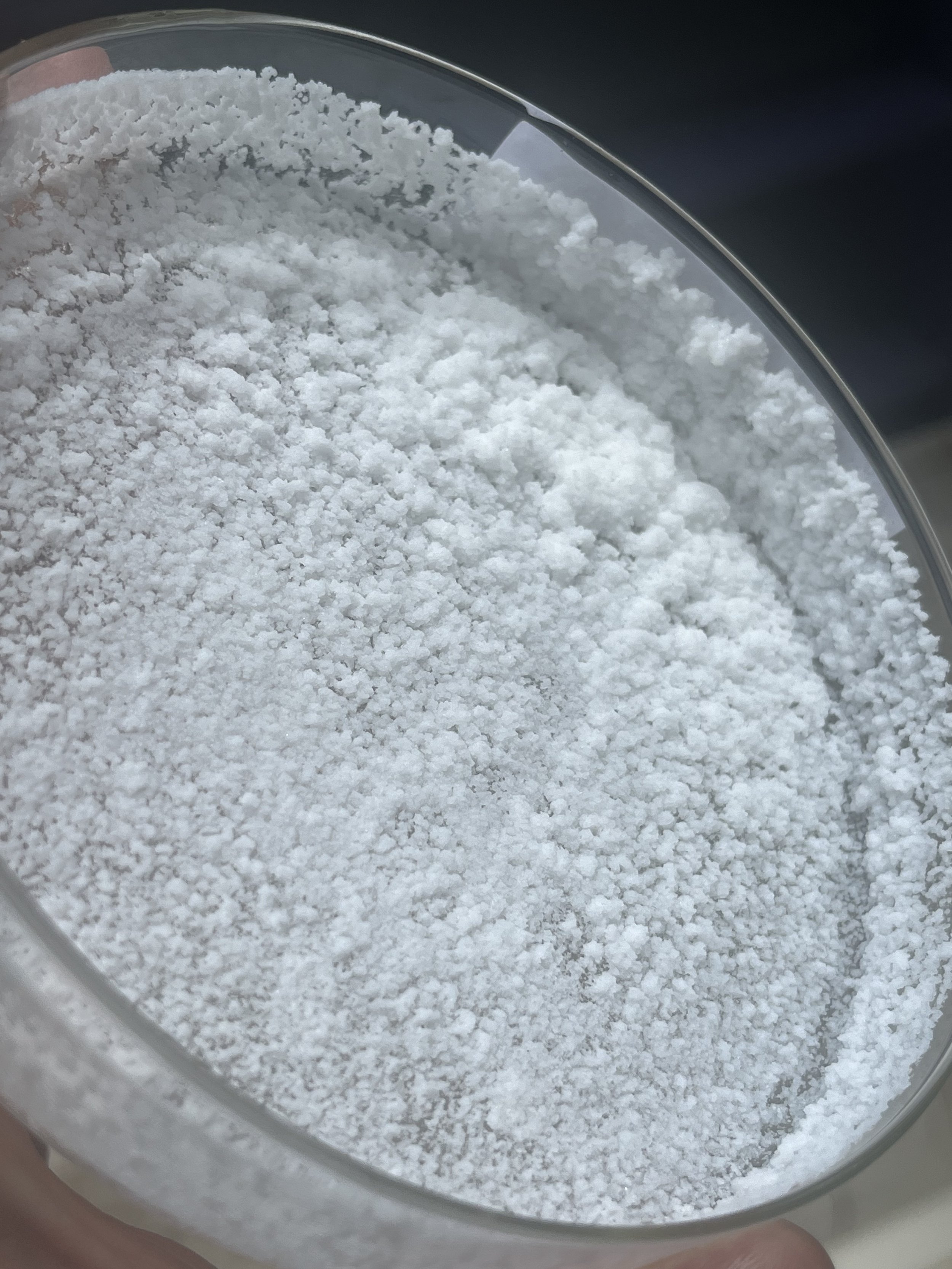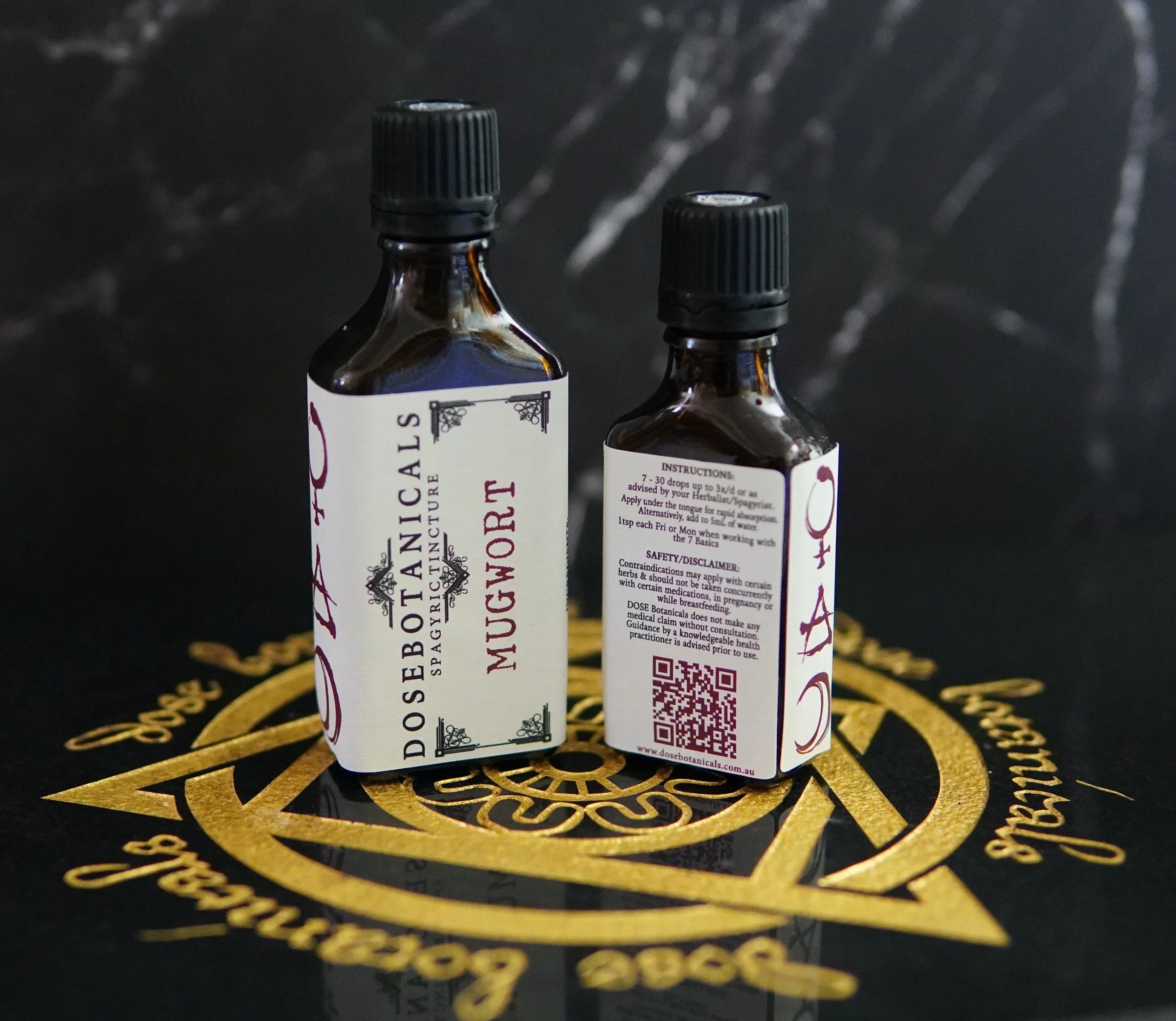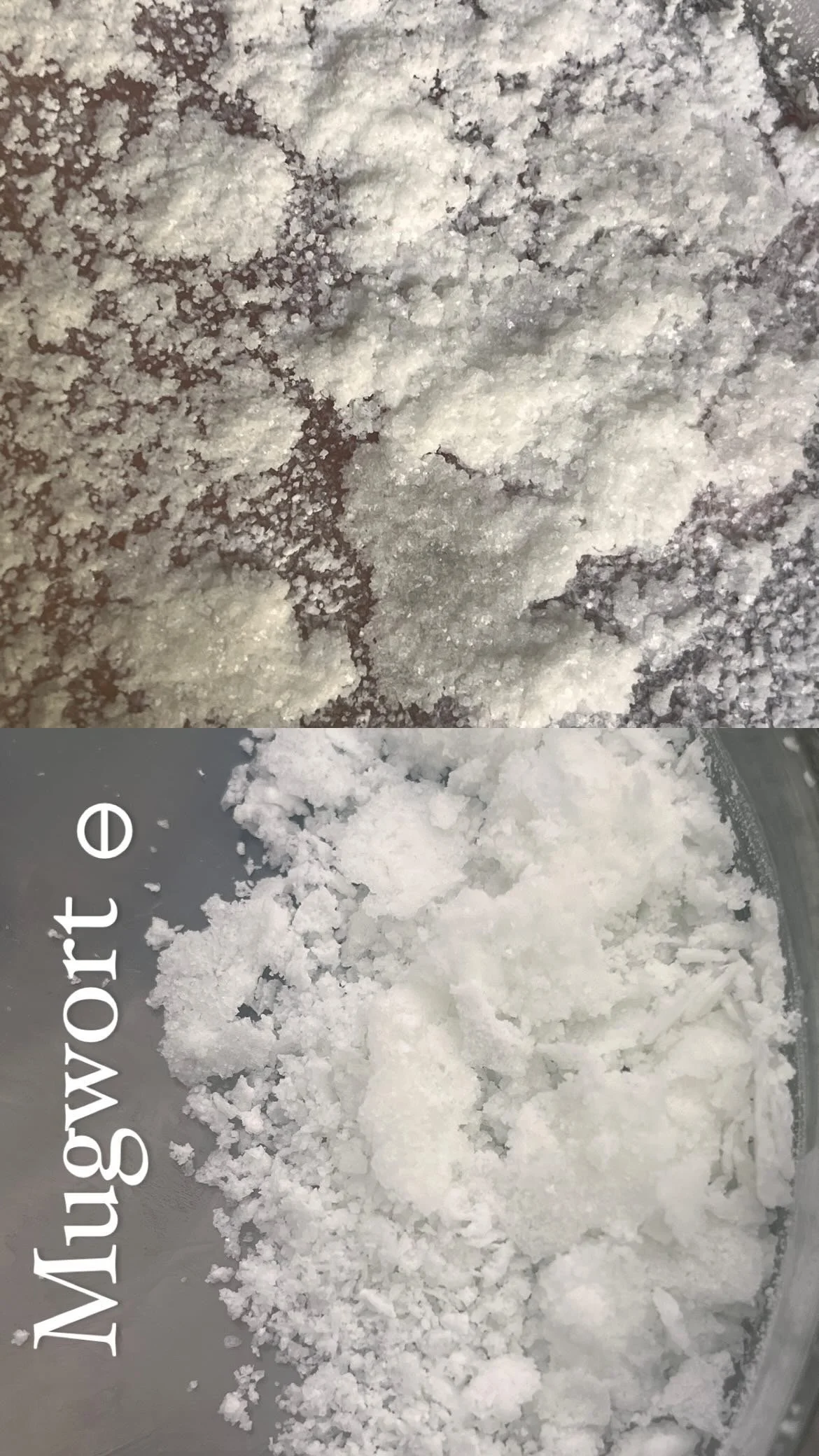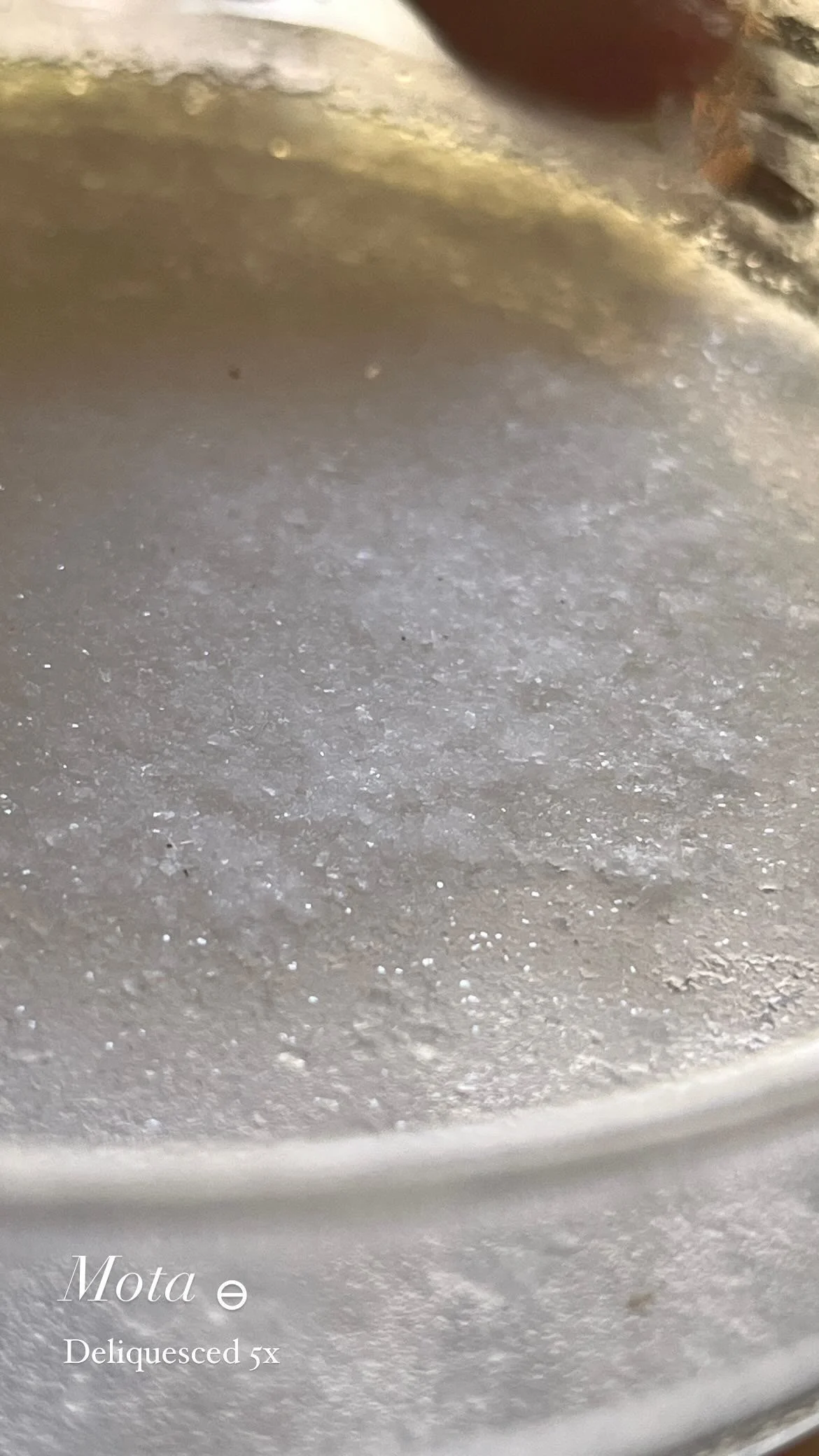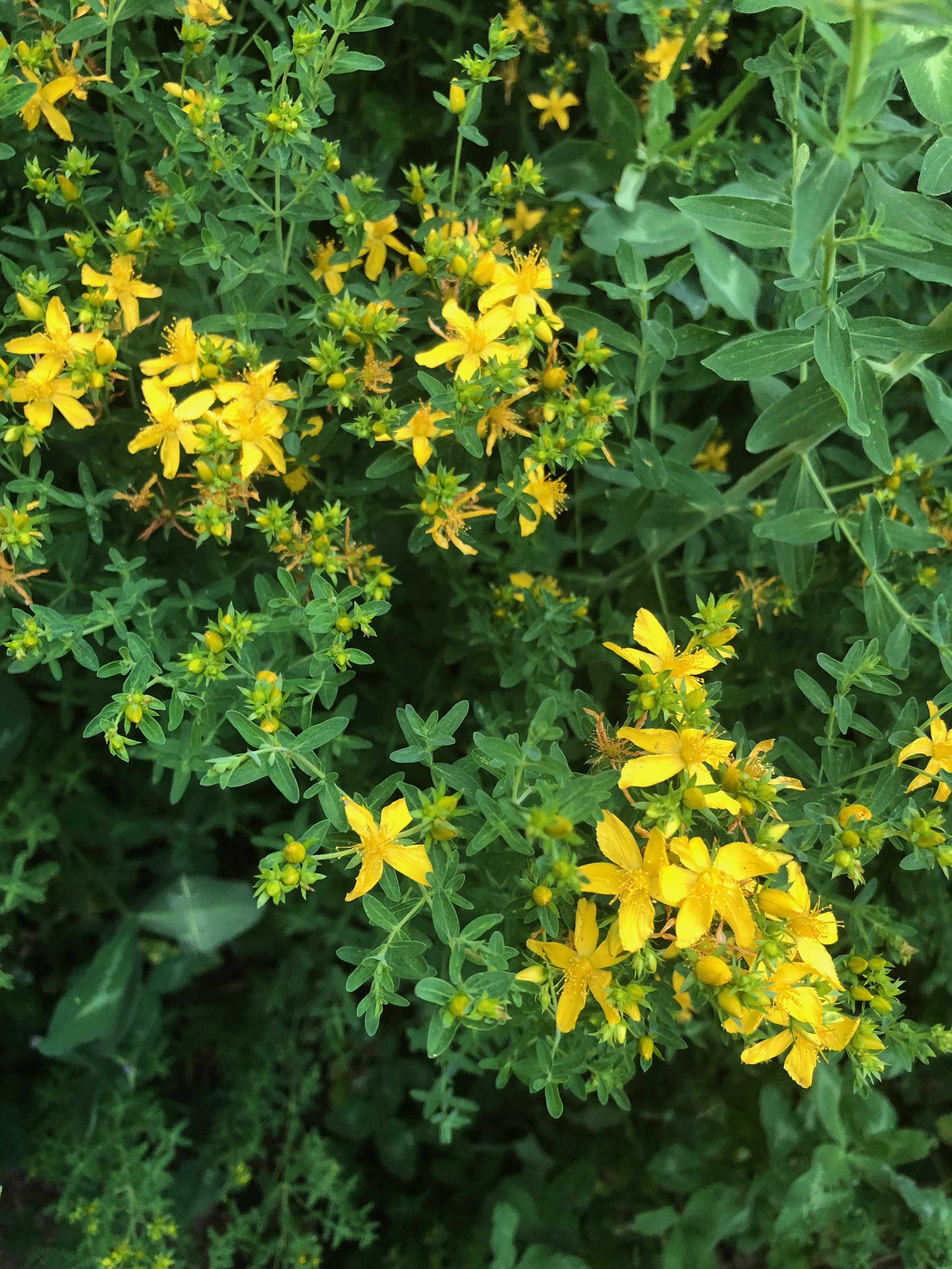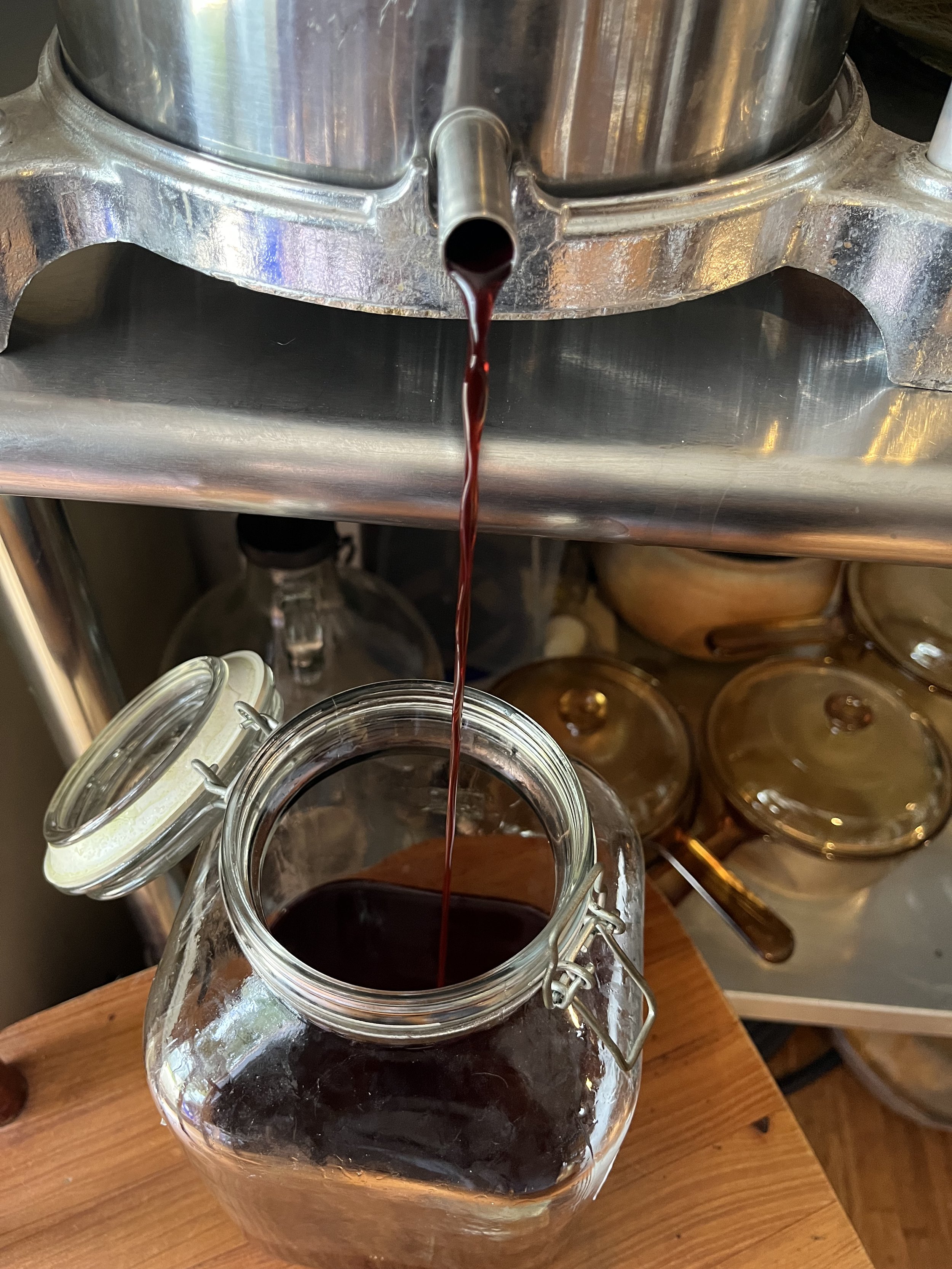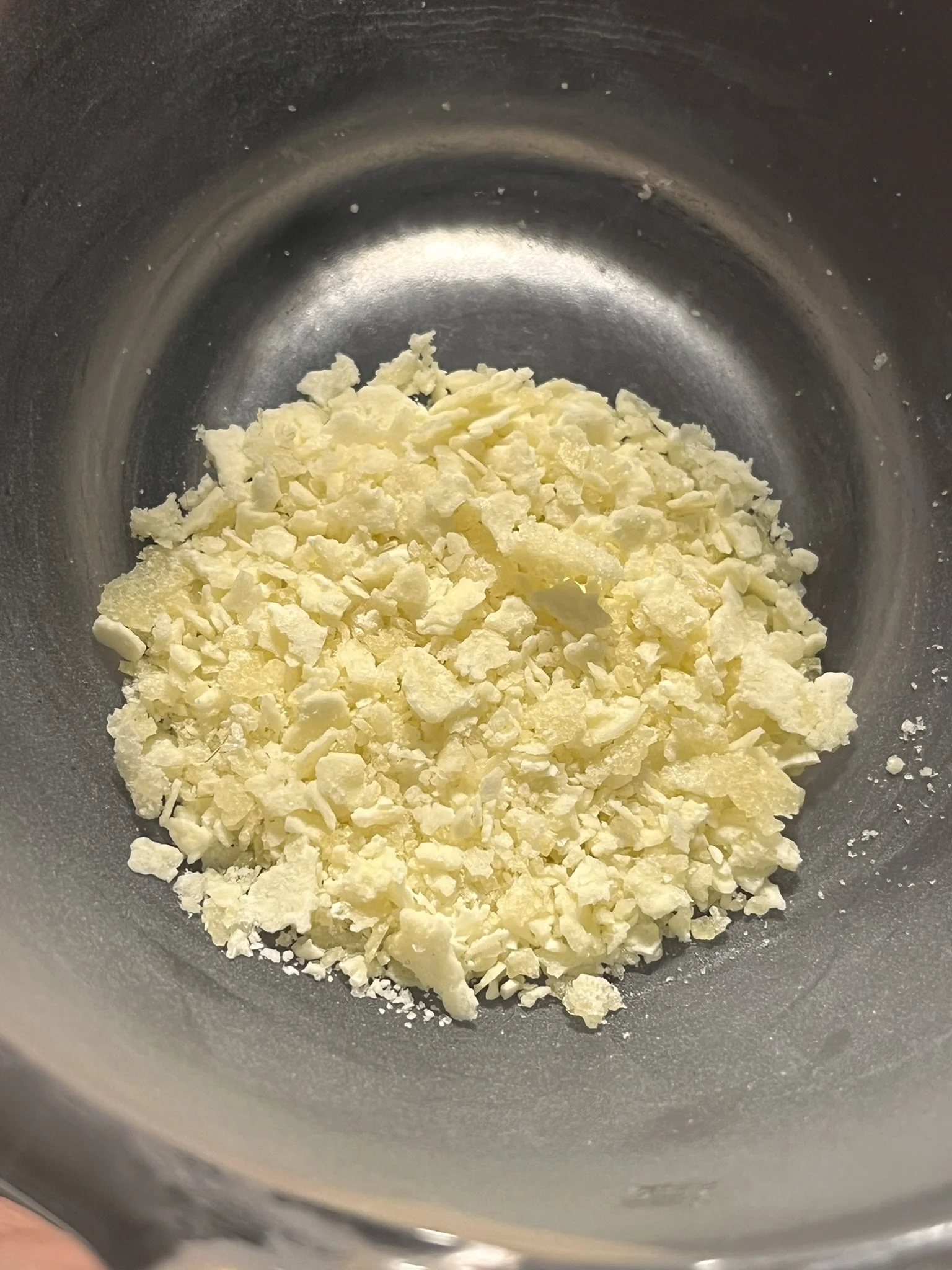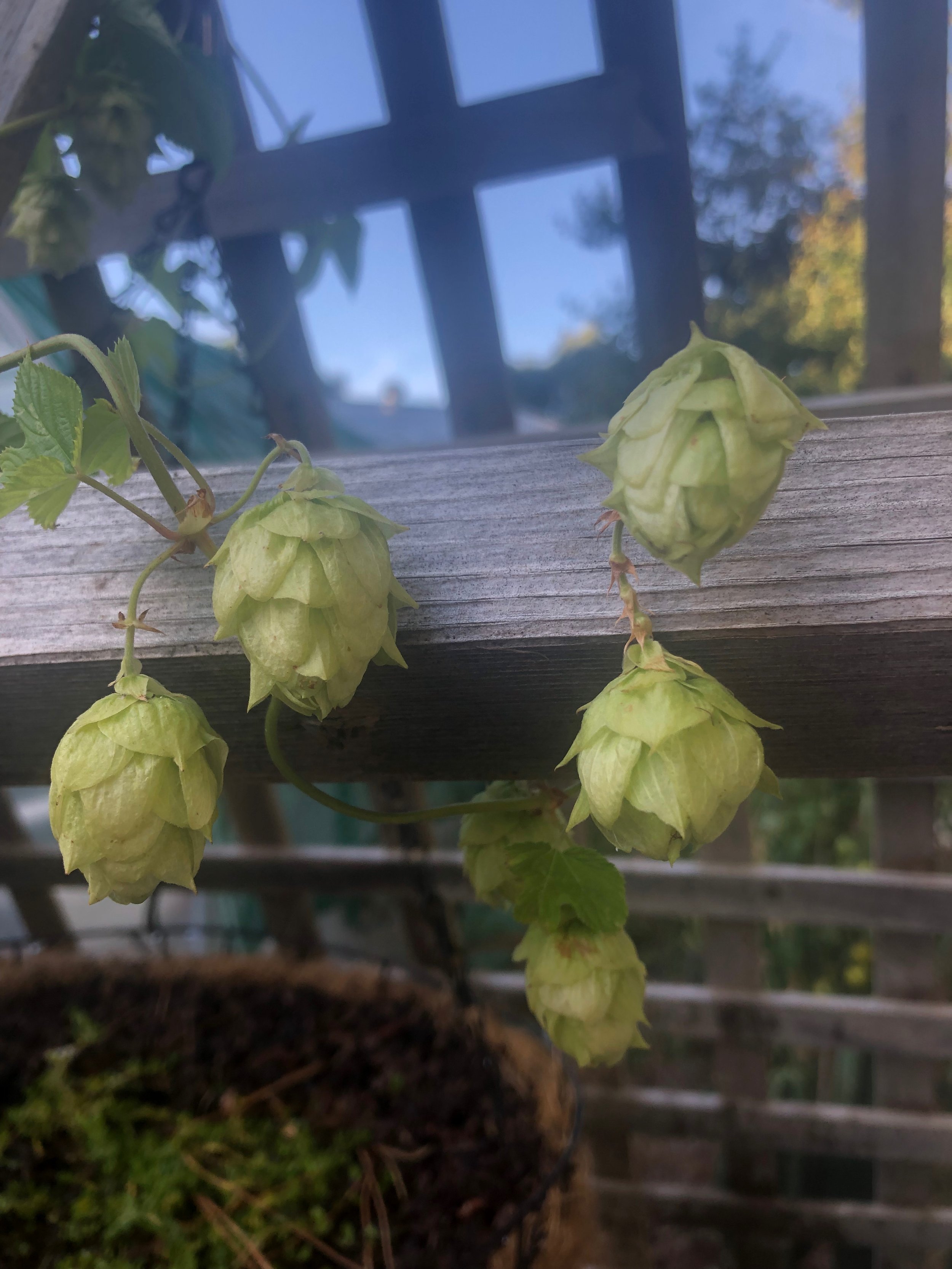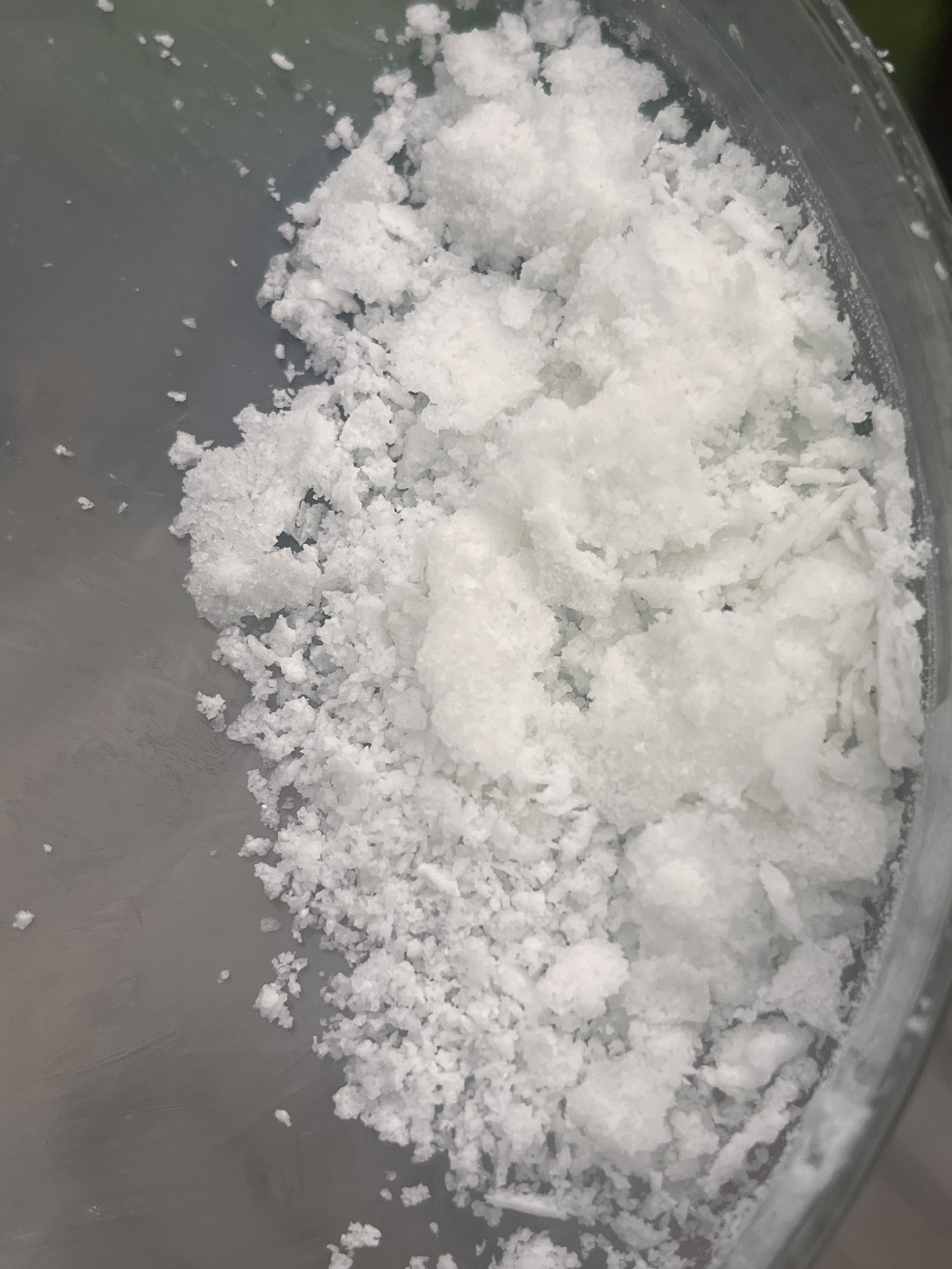
Spagyric tinctures are prepared through an alchemical process that honours the full anatomy of the plant: the spirit, soul, and body. The volatile oils (soul), water & alcohol-soluble components (spirit), and purified mineral salts (body) are individually separated, refined, and then intentionally reunited. The result is a living preparation, not merely an extract, that carries the full life-force and signature intelligence of the plant in an exceptionally bioavailable form.
All of our herbal extracts use organically grown and/or ethically wildcrafted herbs and certified organic food-grade ethanol diluted to specific potencies in filtered and/or distilled rainwater, unless otherwise specified.
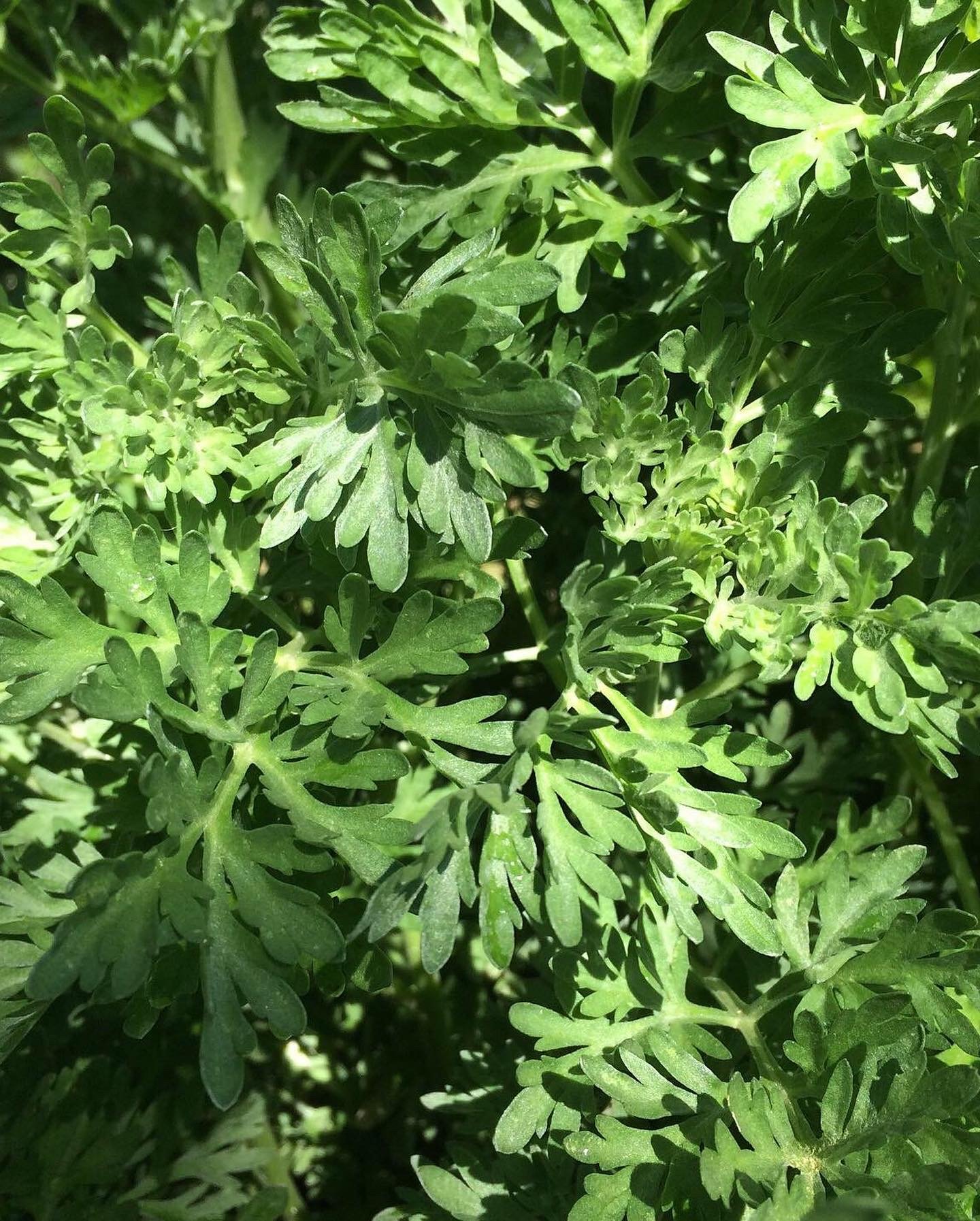
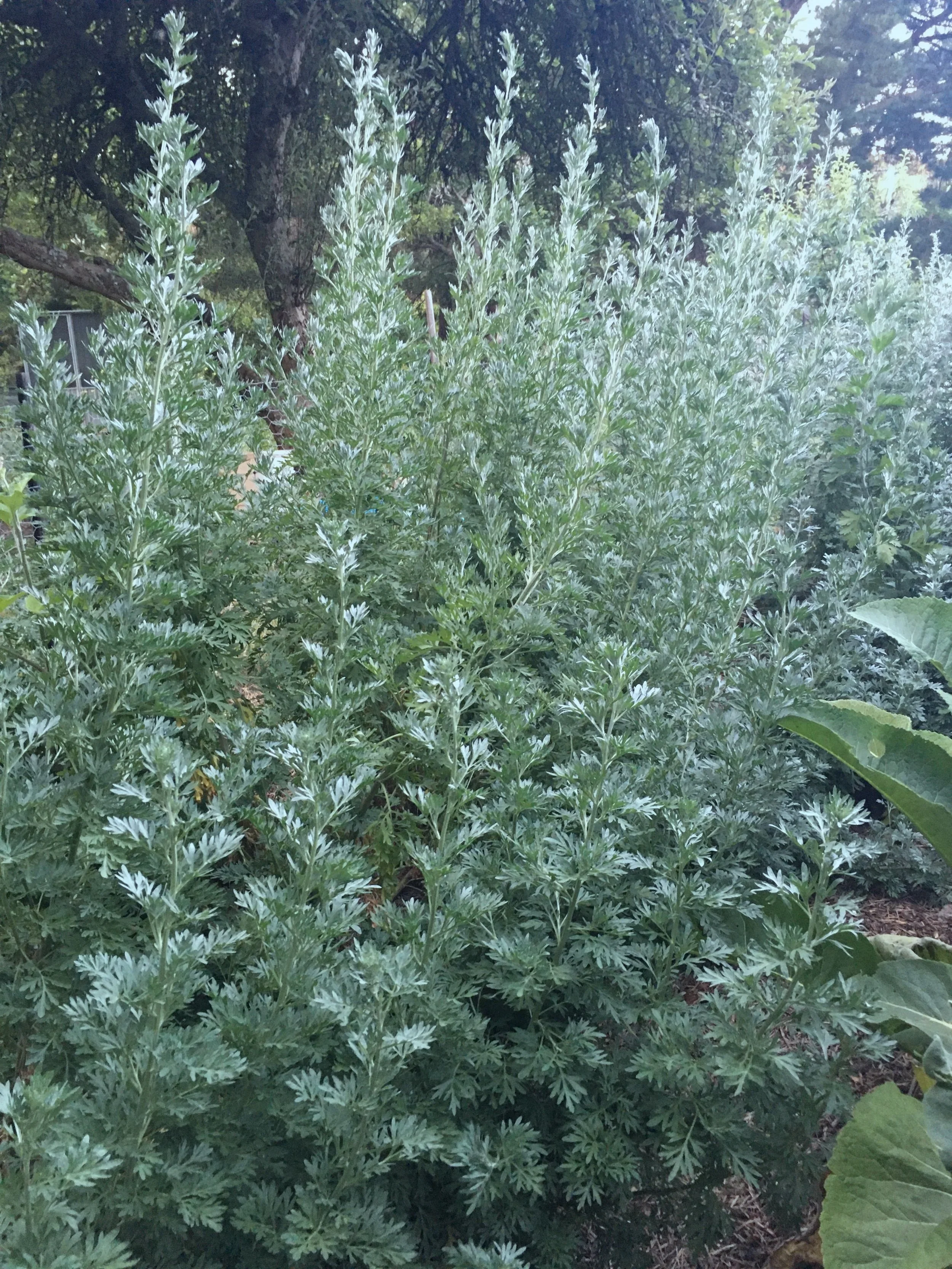
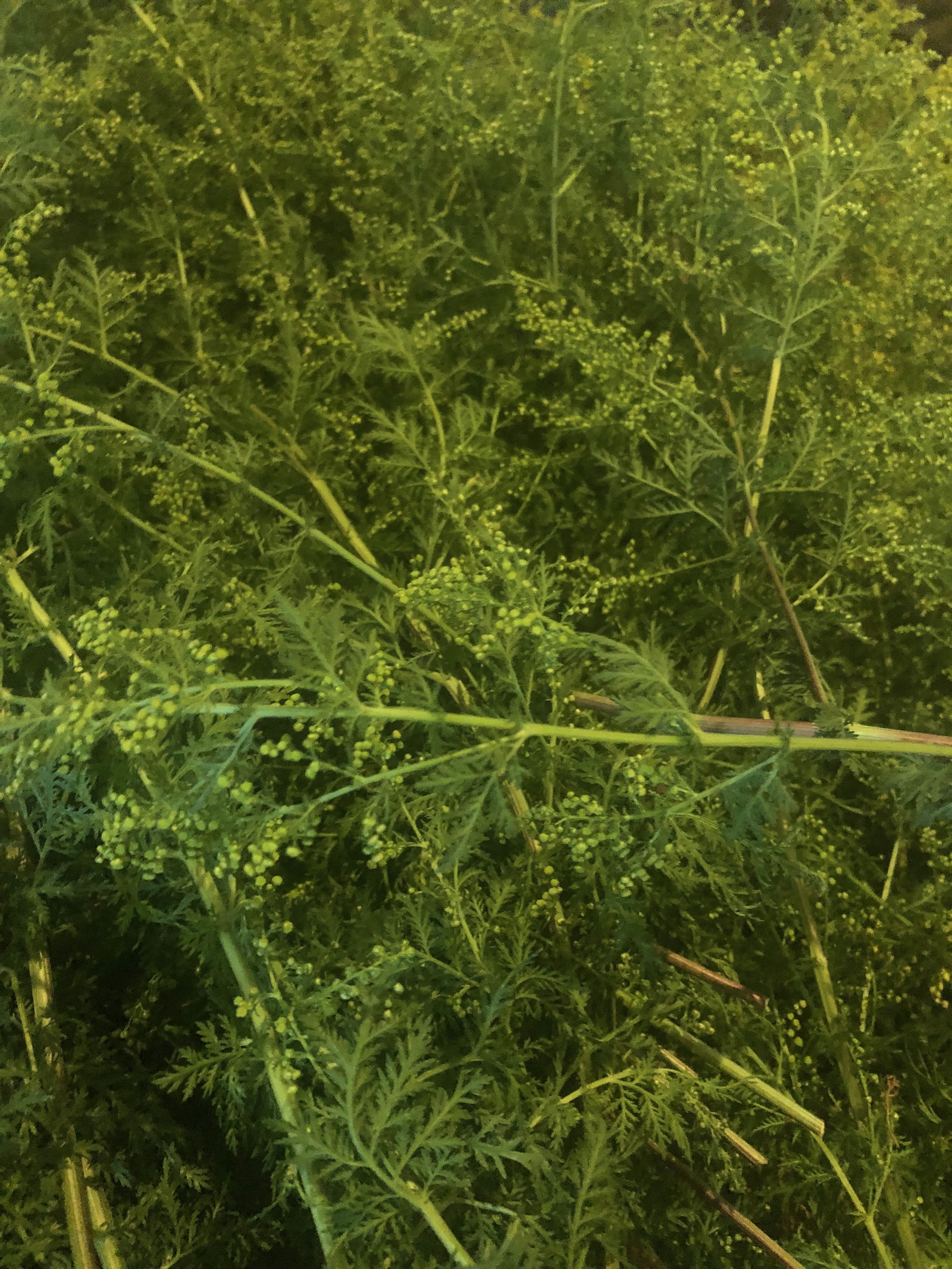
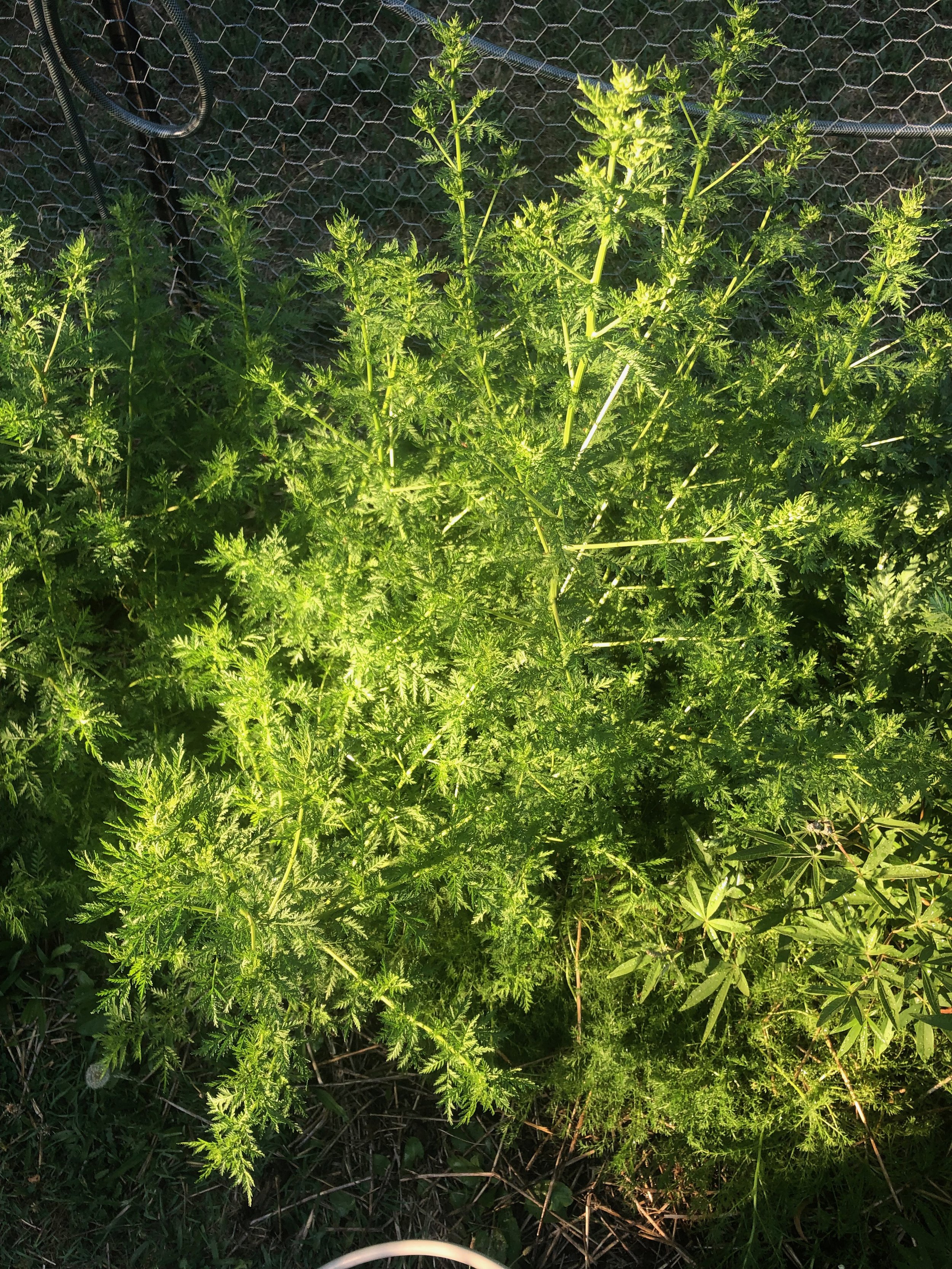
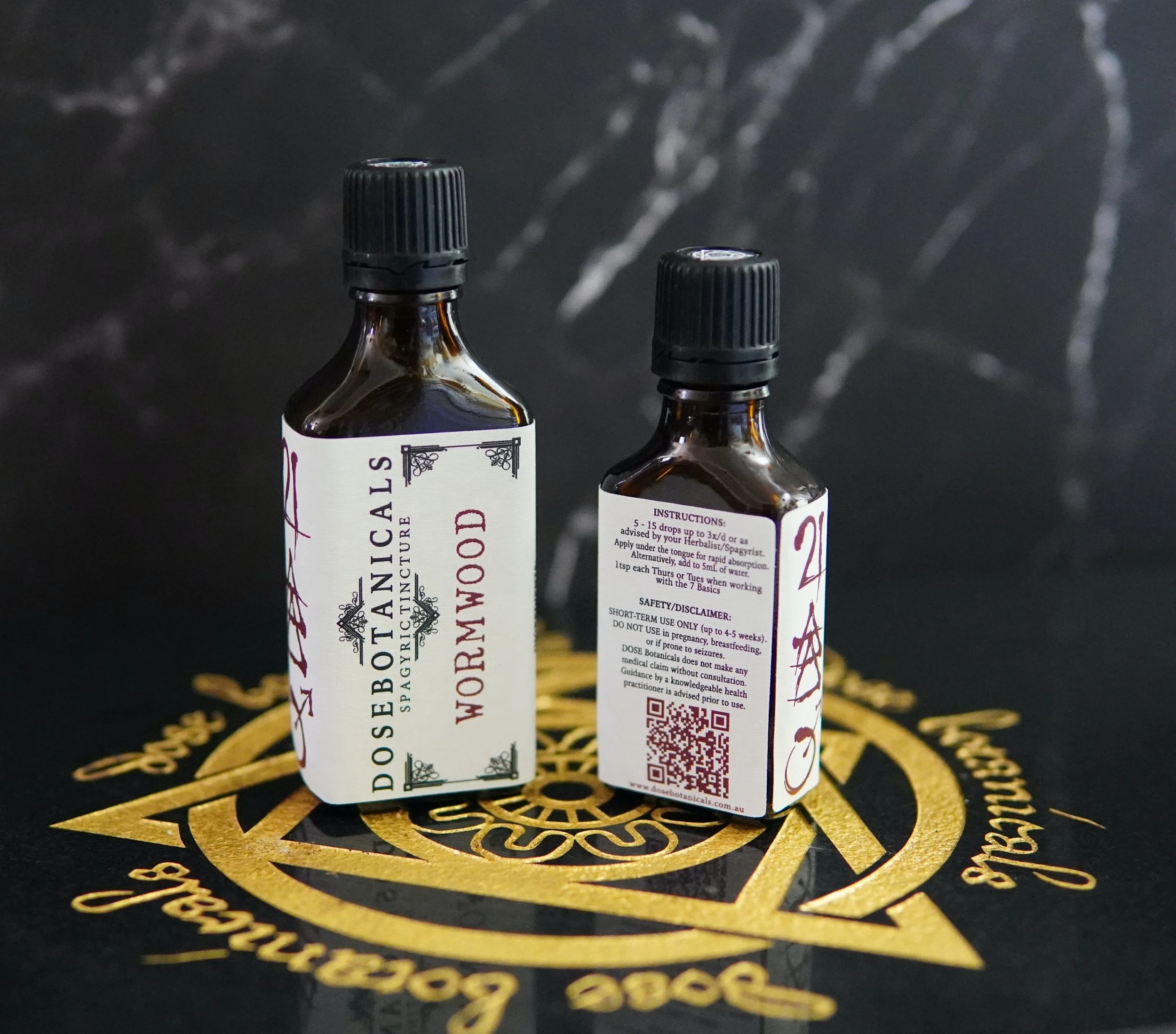
Wormwood (Artemisia absinthium) is a highly aromatic member of the Asteraceae family, traditionally valued across European and Middle Eastern medicine for its intensely bitter, warming, and drying qualities. Rich in sesquiterpene lactones (notably absinthin) and volatile oils containing thujone, wormwood has long been used as a potent digestive stimulant and general tonic for areas of stagnation or coldness in the body. This preparation is made from the dried leaf.
Traditionally, wormwood is described as a deeply pungent-bitter herb with a warming, dispersive influence on the tissues. Wormwood’s bitterness enhances digestive secretions, bile flow and appetite, while its warming aromatic nature helps to mobilise “cold-damp” accumulations manifesting as sluggish digestion, bloating, heaviness, or a sense of internal chill. Energetically, wormwood is considered helpful where there is stagnation, constriction, or torpor, particularly within the gastrointestinal tract and hepatobiliary system.
By these actions, wormwood has been employed to dispel cold-damp and stagnant-wind patterns linked with indigestion, nausea, poor assimilation, and general debility. In the broader traditional materia medica it was also utilised for “melancholic” states associated with digestive-liver congestion, reflecting its historical use as both a physical and subtle tonic.
Wormwood’s aromatic bitterness supports the movement of stuck energy, making it particularly useful in constitutionally cold, sluggish, or in individuals with vitality-depletion where gentle provocation and rekindling of digestive fire is needed. Traditional humoral medicine links digestive disturbances (“cold-damp in the stomach,” “wind blocking the diaphragm,” or sluggish bile) with agitated sleep and nightmares — thereby wormwood's bitter and warming actions may help to correct these internal patterns.
DOSE BOTANICALS DOES NOT MAKE ANY MEDICAL OR THERAPEUTIC CLAIM WITHOUT CONSULTATION. THIS INFORMATION IS FOR EDUCATIONAL PURPOSES ONLY.
Spagyric tinctures are prepared through an alchemical process that honours the full anatomy of the plant: the spirit, soul, and body. The volatile oils (soul), water & alcohol-soluble components (spirit), and purified mineral salts (body) are individually separated, refined, and then intentionally reunited. The result is a living preparation, not merely an extract, that carries the full life-force and signature intelligence of the plant in an exceptionally bioavailable form.
All of our herbal extracts use organically grown and/or ethically wildcrafted herbs and certified organic food-grade ethanol diluted to specific potencies in filtered and/or distilled rainwater, unless otherwise specified.
Wormwood (Artemisia absinthium) is a highly aromatic member of the Asteraceae family, traditionally valued across European and Middle Eastern medicine for its intensely bitter, warming, and drying qualities. Rich in sesquiterpene lactones (notably absinthin) and volatile oils containing thujone, wormwood has long been used as a potent digestive stimulant and general tonic for areas of stagnation or coldness in the body. This preparation is made from the dried leaf.
Traditionally, wormwood is described as a deeply pungent-bitter herb with a warming, dispersive influence on the tissues. Wormwood’s bitterness enhances digestive secretions, bile flow and appetite, while its warming aromatic nature helps to mobilise “cold-damp” accumulations manifesting as sluggish digestion, bloating, heaviness, or a sense of internal chill. Energetically, wormwood is considered helpful where there is stagnation, constriction, or torpor, particularly within the gastrointestinal tract and hepatobiliary system.
By these actions, wormwood has been employed to dispel cold-damp and stagnant-wind patterns linked with indigestion, nausea, poor assimilation, and general debility. In the broader traditional materia medica it was also utilised for “melancholic” states associated with digestive-liver congestion, reflecting its historical use as both a physical and subtle tonic.
Wormwood’s aromatic bitterness supports the movement of stuck energy, making it particularly useful in constitutionally cold, sluggish, or in individuals with vitality-depletion where gentle provocation and rekindling of digestive fire is needed. Traditional humoral medicine links digestive disturbances (“cold-damp in the stomach,” “wind blocking the diaphragm,” or sluggish bile) with agitated sleep and nightmares — thereby wormwood's bitter and warming actions may help to correct these internal patterns.
DOSE BOTANICALS DOES NOT MAKE ANY MEDICAL OR THERAPEUTIC CLAIM WITHOUT CONSULTATION. THIS INFORMATION IS FOR EDUCATIONAL PURPOSES ONLY.