Safe for ingestion: It should be known that flower essences are a vibrational and not pharmacological extract, meaning none of the active (incl. psychotropic or alkaloidal) components are present.
𓇗
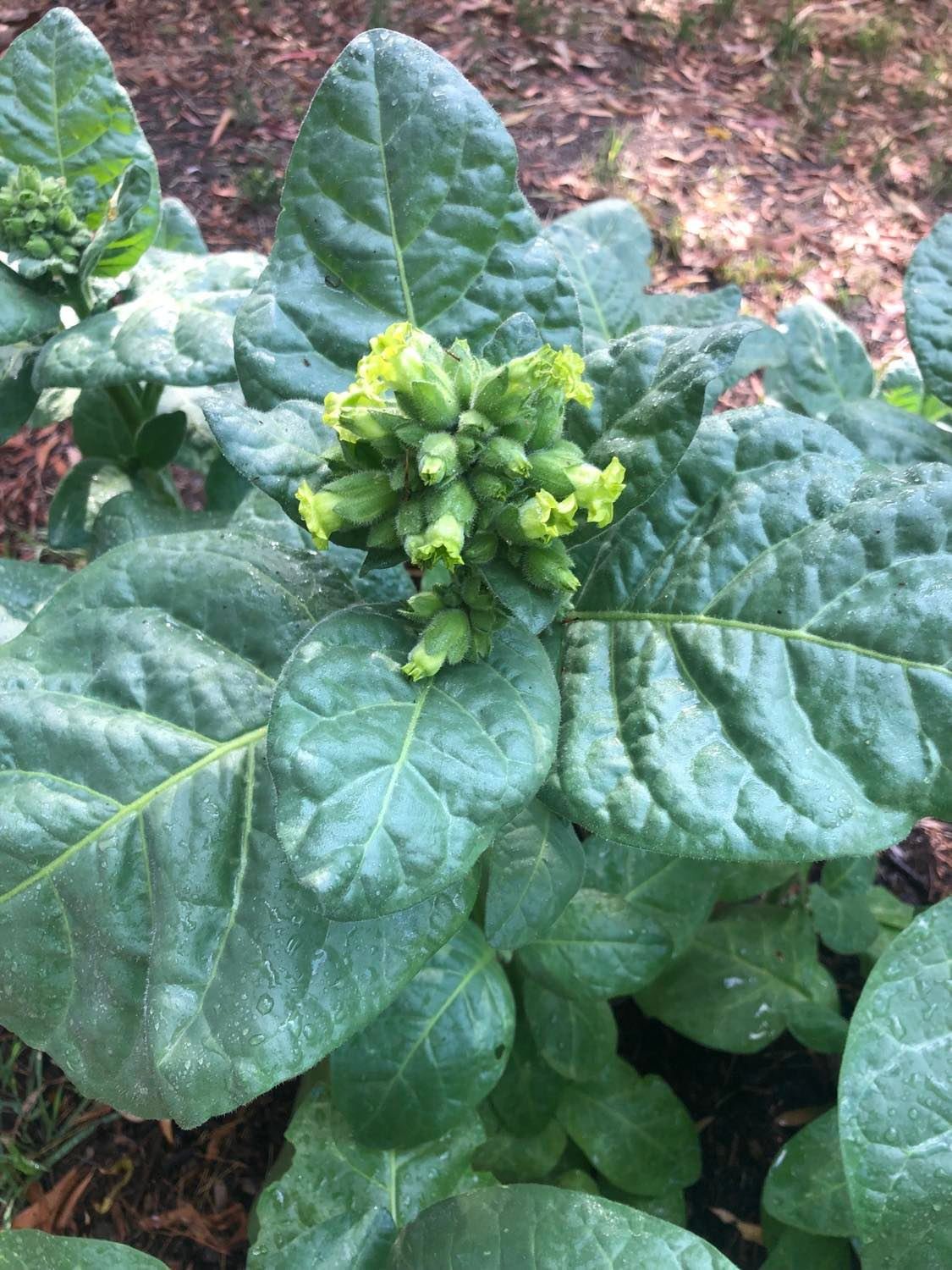
Belladonna (Atropa belladonna), otherwise known as deadly nightshade, is a member of the Solanaceae (Nightshade) family with a long held formidable reputation as both a potent poison and a powerful medicinal plant. Native to central, southern, and eastern parts of Europe, southwestern Asia, and northwestern Africa. Belladonna has also naturalised throughout western Europe, as far as Iran, and has been introduced across the seas to parts of North America and Australia.
“When we encounter the deadly nightshade during our excursion through the columned halls of the forest, a strange feeling comes over us, as if a secretive being with fixed, staring eyes were standing behind the mysterious plant. Its sparkling, shiny black fruits reflect back to us in the dark light of the forest. The deadly nightshade has an aura of danger about it, and we can feel as we look at it that caution is advised.” – Bruno Vonarburg, Die Tollkirsche (1996, p. 61)
Since antiquity, Atropa belladonna has been enshrouded within myth, magic, and cautionary tales. A herb of “witches”, sorcerers, and mystics, belladonna has been a central element in folklore across cultures. The genus name Atropa derives from Atropos, one of the three Moirai (Fates) in Greek mythology, who was responsible for cutting the thread of life - signifying the herb’s potentially lethal nature. This is one example of the symbols behind Belladonna’s association with death, transformation, and liminality or the space between worlds.
Some sources suggest that Roman priests consumed belladonna-infused preparations before praying to Bellona, the goddess of war, to invoke visions or divine favour. While the details of these rituals are debated, Belladonna’s known psychoactive effects lend credibility to the potential use in oracular ceremonies (Dioscorides, De Materia Medica, 1st century CE).
In the central and northern regions of Europe, Belladonna has once again been linked to death, the afterlife, and visionary experiences. Ethnobotanist Christian Rätsch (1998) notes that in the Lower Rhine region, the fruits were called Walkerbeeren (“Valkyrie berries”), and the plant itself was known as Walkerbaum (“Valkyrie tree”) - a reference he attributes to Perger (1864). Some Germanic folklore suggests that consuming these berries could transport the soul, potentially aligning with the Valkyries’ mythological role in guiding the dead.
Giovanni Battista della Porta (1589) listed Atropa belladonna among the magical plants used in shape-shifting rituals. In ‘Magia Naturalis’, he describes how European sorcerers (or the like) allegedly applied Belladonna-infused ointments (unguents) to facilitate transformations into birds, wolves, or other creatures. This belief in belladonna’s power to alter perception and reality persisted well into the Renaissance period. Over time, these associations led to its demonisation, yet they also preserved the memory of a plant once understood to command deep respect.
Today, belladonna is cultivated primarily for historical, educational, and botanical interest remaining a plant best approached with restraint, awareness, and a clear understanding of safe practices.
𓇗
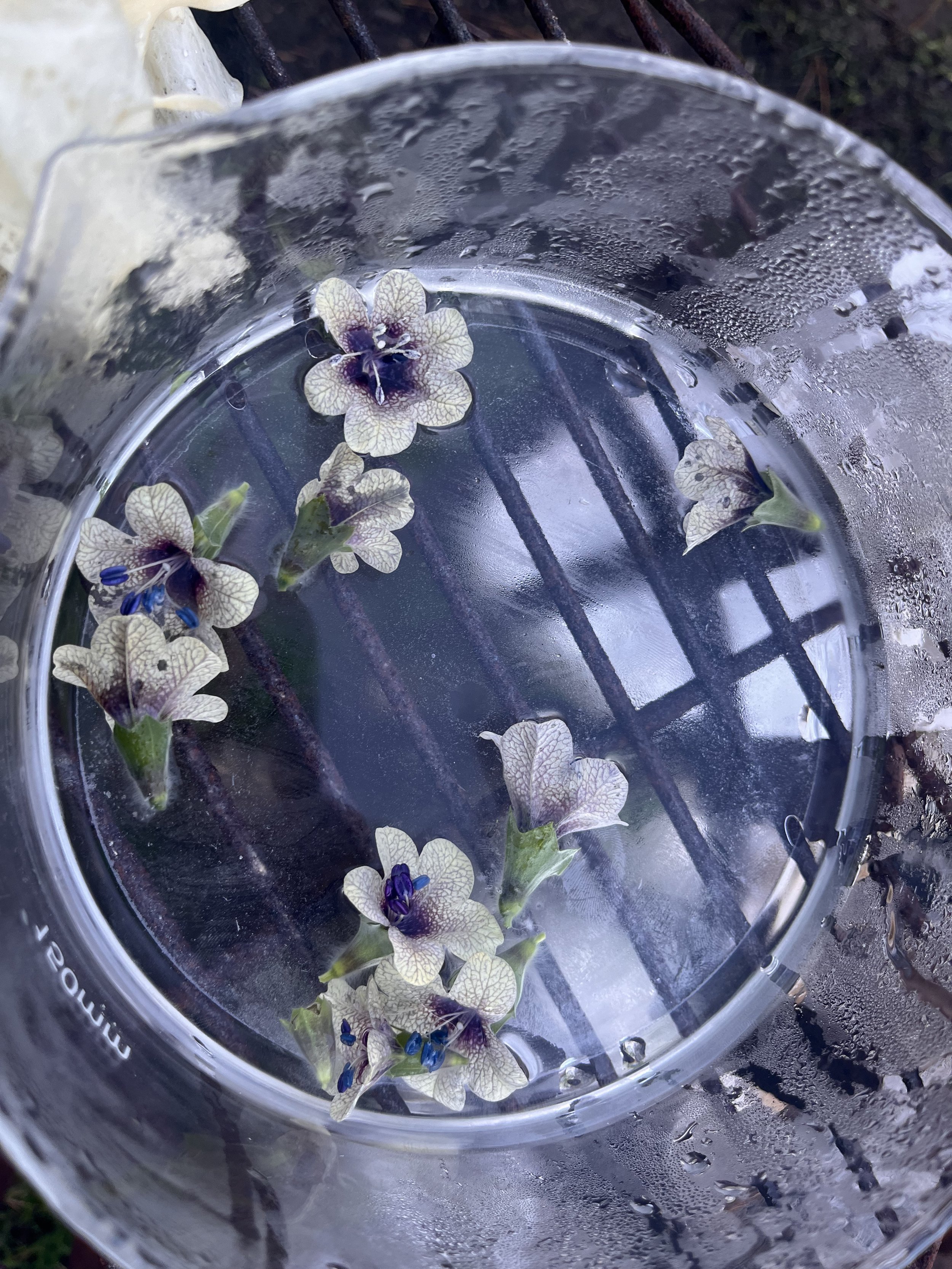
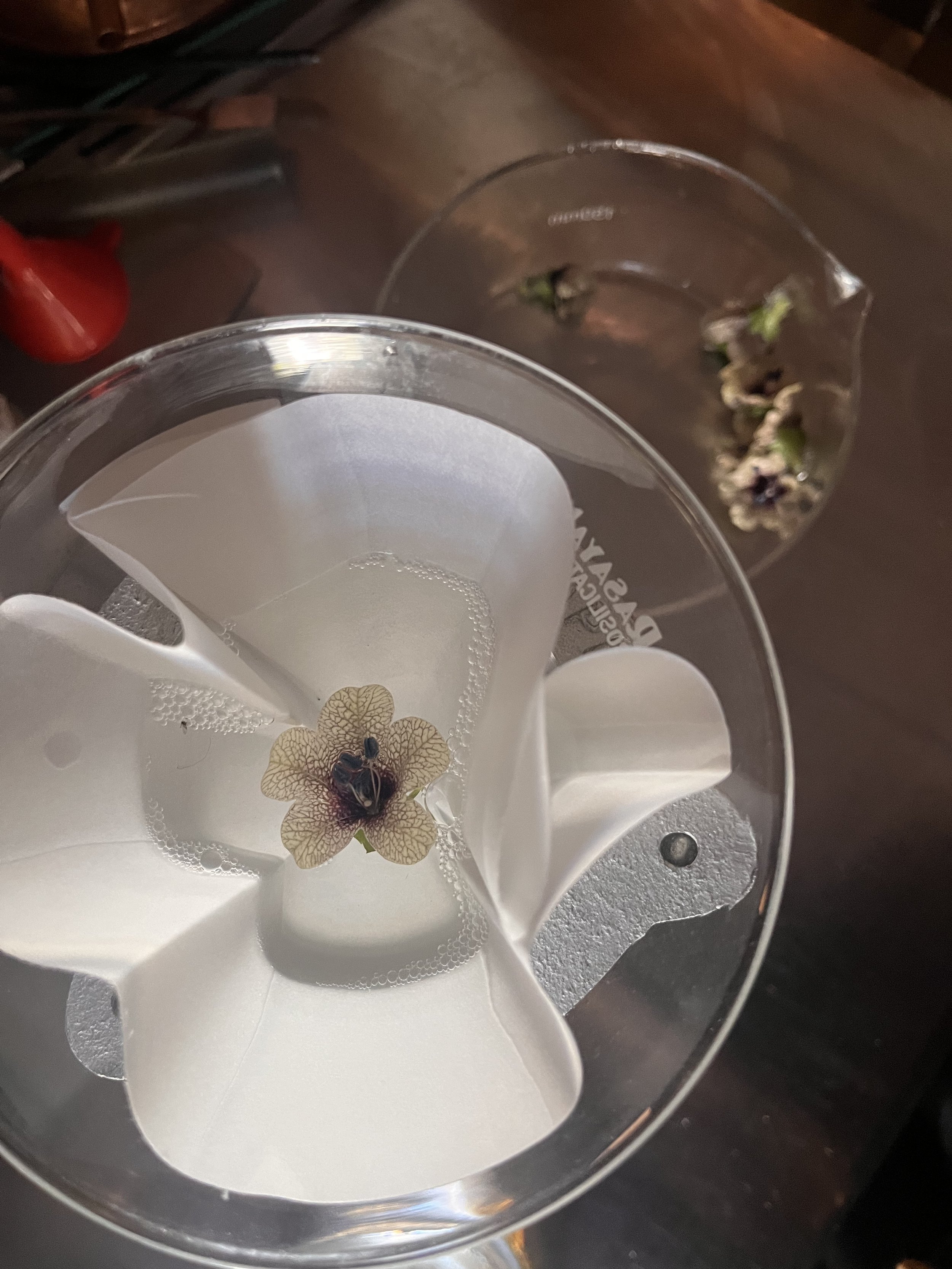
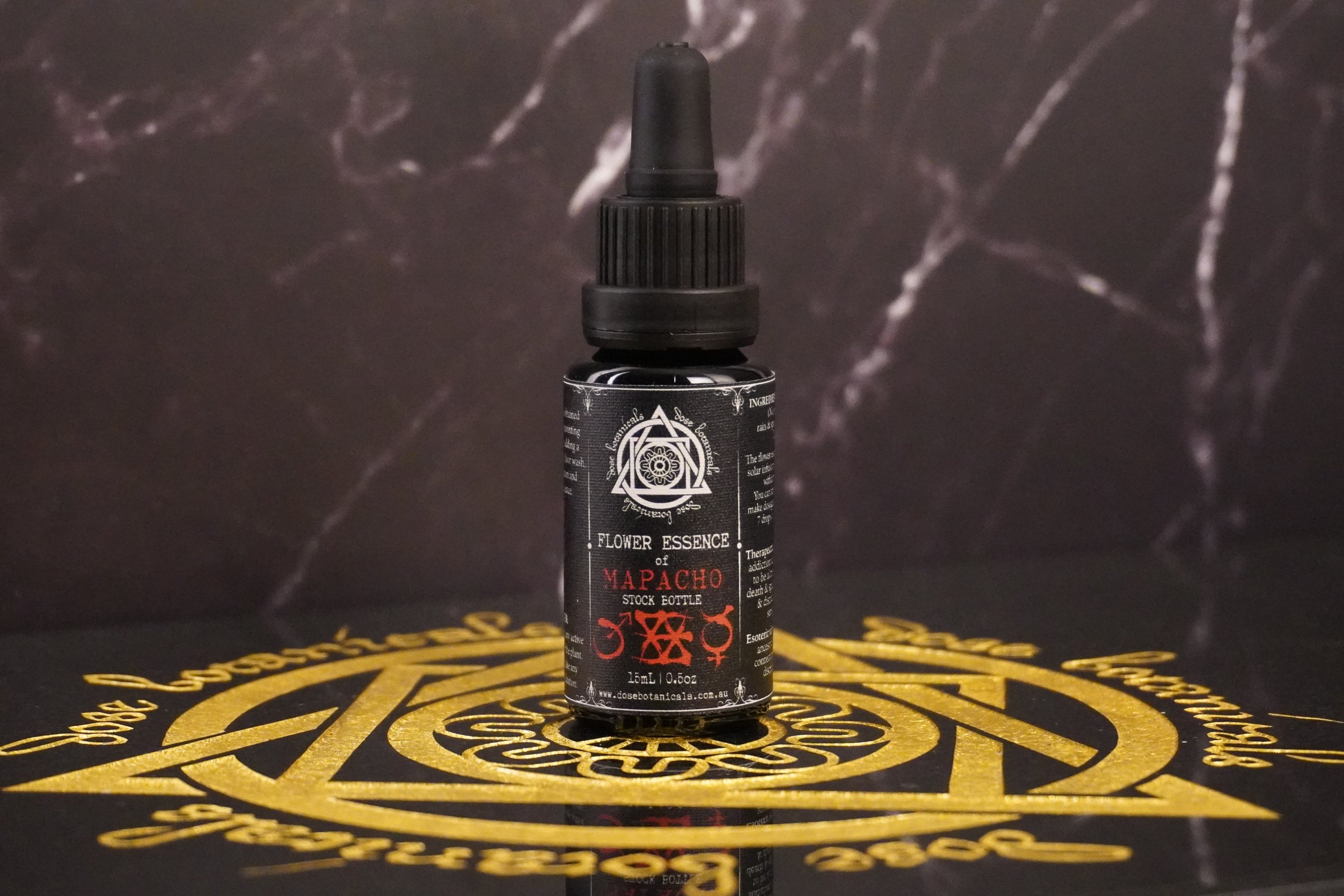
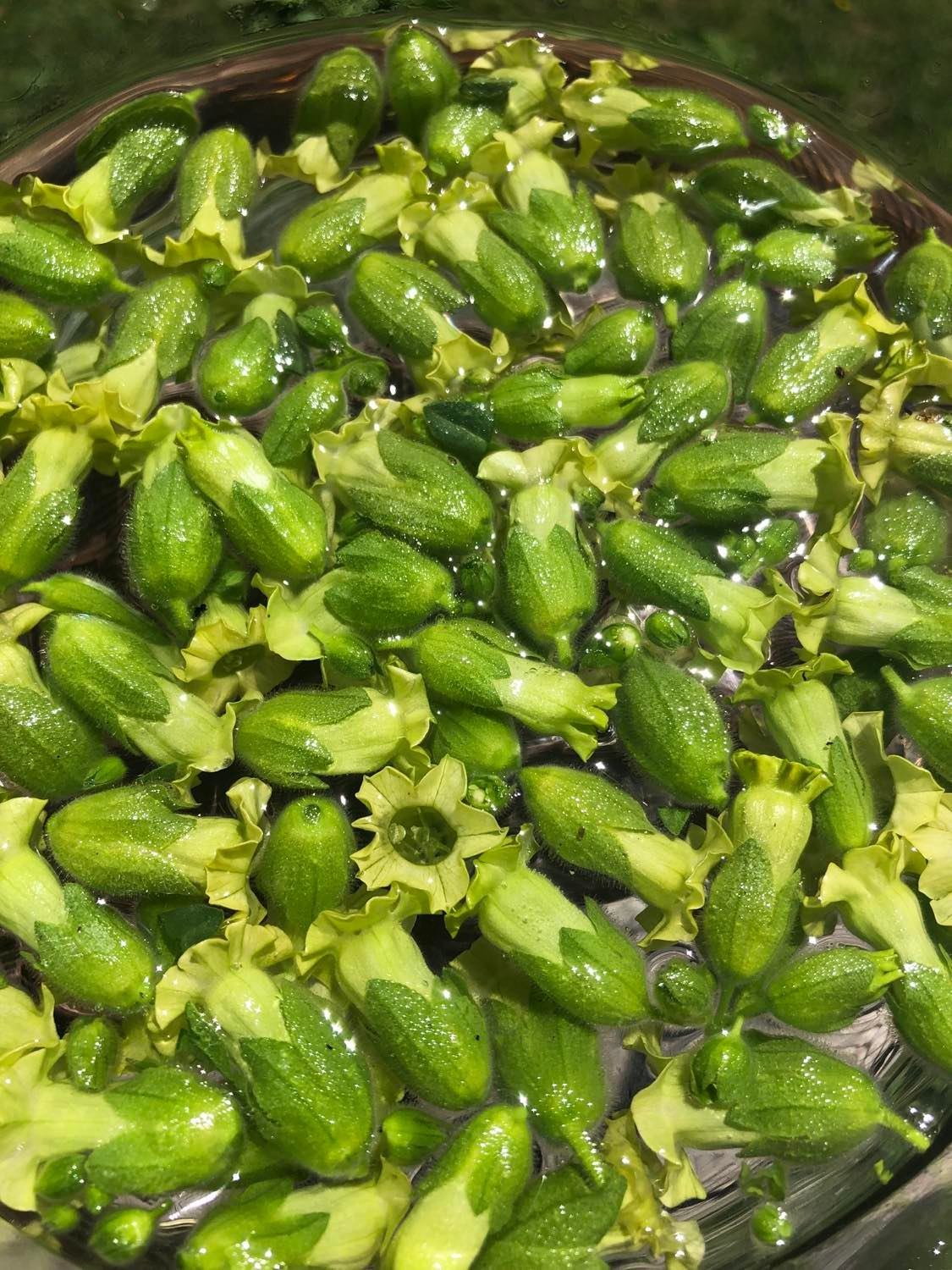
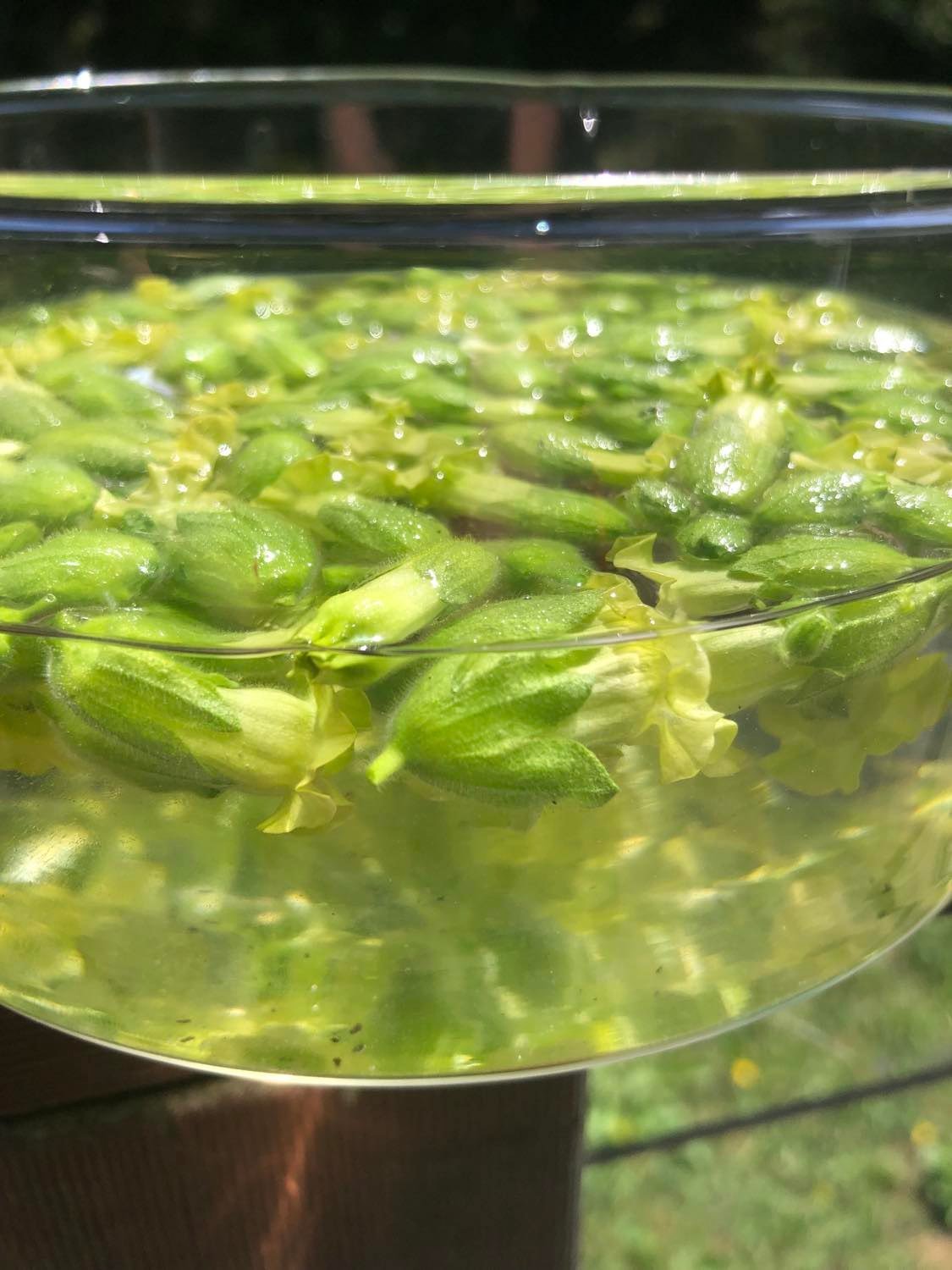
The flower essence of Belladonna is made through solar infusion, imprinting the flower’s vibration within the water’s energetic matrix. This 15mL bottle is technically a stock bottle, meaning you can further dilute the stock essence to make dosage bottles [read more on Flower Essences, including their method of action, how to use them & how to make up a dosage bottle]. Each stock bottle contains 7 drops of the original mother essence of Belladonna, made under the Pisces new moon of March 2025.
The virtues of Belladonna can be obtained through ingesting the essence, anointing talismans, and candles, and/or adding a few drops to a spray/hydrosol or floor wash.
𓇗
Planetary Correspondences: Saturn, Venus & Moon
Elemental Correspondences: Water
Energetics: Cold & Dry
General Uses: grief, melancholy & despondency; feelings of inadequacy or unworthiness; lack of self-compassion & acceptance; surrender & mercy; emotional breakthrough
Esoteric Virtues: trance-inducing; breaking epigenetic loops; necromancy & death rites; allure & love magic; lycanthropy & transmutation; protection from noxious influence; contractual breakage; consecration of ritual items
𓇗
Ingredients: Mother essence of Belladonna (Atropa belladonna) flower, filtered rain & spring water, distilled grape wine, Celtic sea salt (Sel gris)
Bottled in Miron Glass
DOSE BOTANICALS DOES NOT MAKE ANY MEDICAL OR THERAPEUTIC CLAIM WITHOUT CONSULTATION. THIS INFORMATION IS FOR EDUCATIONAL PURPOSES ONLY.
Safe for ingestion: It should be known that flower essences are a vibrational and not pharmacological extract, meaning none of the active (incl. psychotropic or alkaloidal) components are present.
𓇗
Belladonna (Atropa belladonna), otherwise known as deadly nightshade, is a member of the Solanaceae (Nightshade) family with a long held formidable reputation as both a potent poison and a powerful medicinal plant. Native to central, southern, and eastern parts of Europe, southwestern Asia, and northwestern Africa. Belladonna has also naturalised throughout western Europe, as far as Iran, and has been introduced across the seas to parts of North America and Australia.
“When we encounter the deadly nightshade during our excursion through the columned halls of the forest, a strange feeling comes over us, as if a secretive being with fixed, staring eyes were standing behind the mysterious plant. Its sparkling, shiny black fruits reflect back to us in the dark light of the forest. The deadly nightshade has an aura of danger about it, and we can feel as we look at it that caution is advised.” – Bruno Vonarburg, Die Tollkirsche (1996, p. 61)
Since antiquity, Atropa belladonna has been enshrouded within myth, magic, and cautionary tales. A herb of “witches”, sorcerers, and mystics, belladonna has been a central element in folklore across cultures. The genus name Atropa derives from Atropos, one of the three Moirai (Fates) in Greek mythology, who was responsible for cutting the thread of life - signifying the herb’s potentially lethal nature. This is one example of the symbols behind Belladonna’s association with death, transformation, and liminality or the space between worlds.
Some sources suggest that Roman priests consumed belladonna-infused preparations before praying to Bellona, the goddess of war, to invoke visions or divine favour. While the details of these rituals are debated, Belladonna’s known psychoactive effects lend credibility to the potential use in oracular ceremonies (Dioscorides, De Materia Medica, 1st century CE).
In the central and northern regions of Europe, Belladonna has once again been linked to death, the afterlife, and visionary experiences. Ethnobotanist Christian Rätsch (1998) notes that in the Lower Rhine region, the fruits were called Walkerbeeren (“Valkyrie berries”), and the plant itself was known as Walkerbaum (“Valkyrie tree”) - a reference he attributes to Perger (1864). Some Germanic folklore suggests that consuming these berries could transport the soul, potentially aligning with the Valkyries’ mythological role in guiding the dead.
Giovanni Battista della Porta (1589) listed Atropa belladonna among the magical plants used in shape-shifting rituals. In ‘Magia Naturalis’, he describes how European sorcerers (or the like) allegedly applied Belladonna-infused ointments (unguents) to facilitate transformations into birds, wolves, or other creatures. This belief in belladonna’s power to alter perception and reality persisted well into the Renaissance period. Over time, these associations led to its demonisation, yet they also preserved the memory of a plant once understood to command deep respect.
Today, belladonna is cultivated primarily for historical, educational, and botanical interest remaining a plant best approached with restraint, awareness, and a clear understanding of safe practices.
𓇗
The flower essence of Belladonna is made through solar infusion, imprinting the flower’s vibration within the water’s energetic matrix. This 15mL bottle is technically a stock bottle, meaning you can further dilute the stock essence to make dosage bottles [read more on Flower Essences, including their method of action, how to use them & how to make up a dosage bottle]. Each stock bottle contains 7 drops of the original mother essence of Belladonna, made under the Pisces new moon of March 2025.
The virtues of Belladonna can be obtained through ingesting the essence, anointing talismans, and candles, and/or adding a few drops to a spray/hydrosol or floor wash.
𓇗
Planetary Correspondences: Saturn, Venus & Moon
Elemental Correspondences: Water
Energetics: Cold & Dry
General Uses: grief, melancholy & despondency; feelings of inadequacy or unworthiness; lack of self-compassion & acceptance; surrender & mercy; emotional breakthrough
Esoteric Virtues: trance-inducing; breaking epigenetic loops; necromancy & death rites; allure & love magic; lycanthropy & transmutation; protection from noxious influence; contractual breakage; consecration of ritual items
𓇗
Ingredients: Mother essence of Belladonna (Atropa belladonna) flower, filtered rain & spring water, distilled grape wine, Celtic sea salt (Sel gris)
Bottled in Miron Glass
DOSE BOTANICALS DOES NOT MAKE ANY MEDICAL OR THERAPEUTIC CLAIM WITHOUT CONSULTATION. THIS INFORMATION IS FOR EDUCATIONAL PURPOSES ONLY.
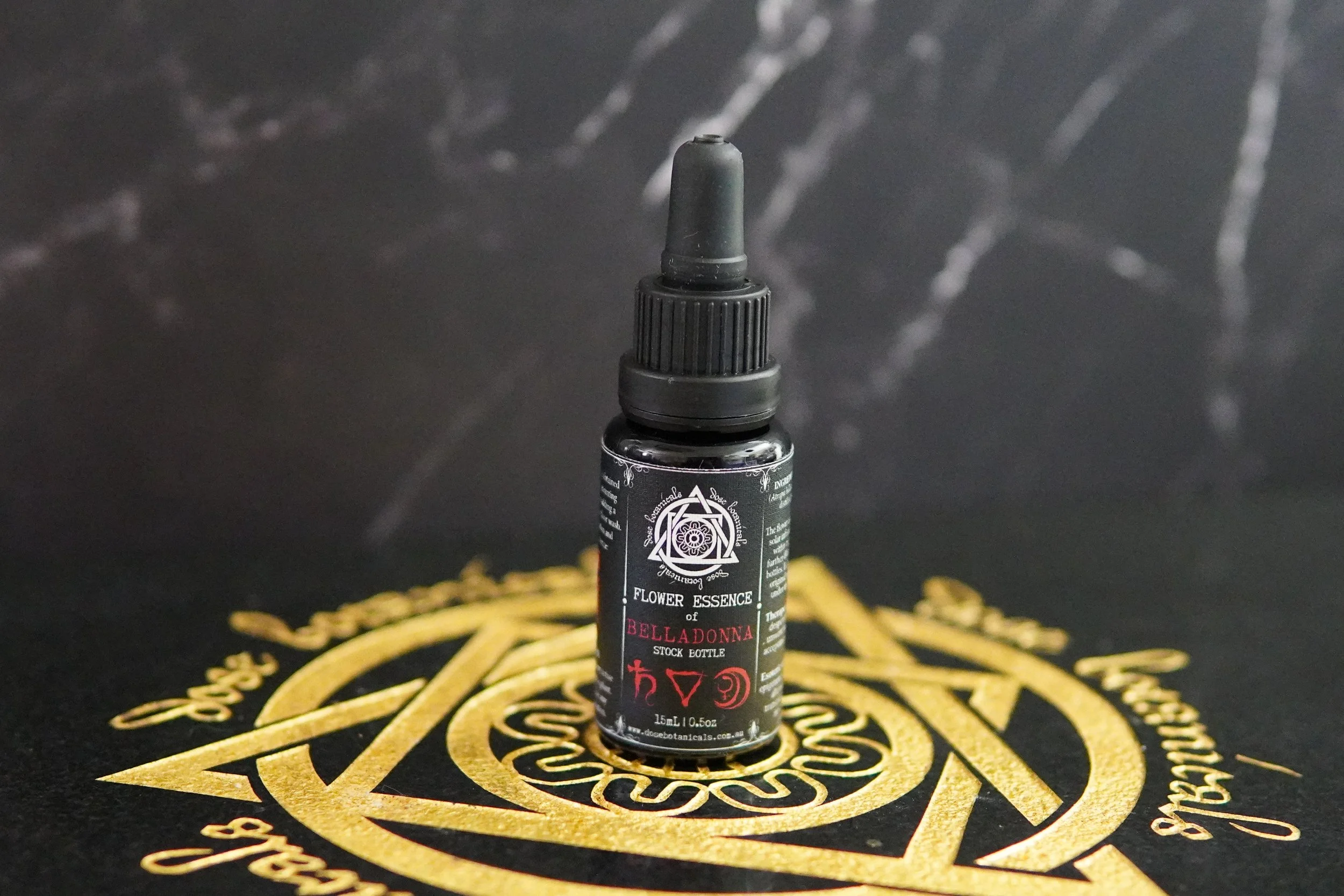 Image 1 of 4
 Image 2 of 4
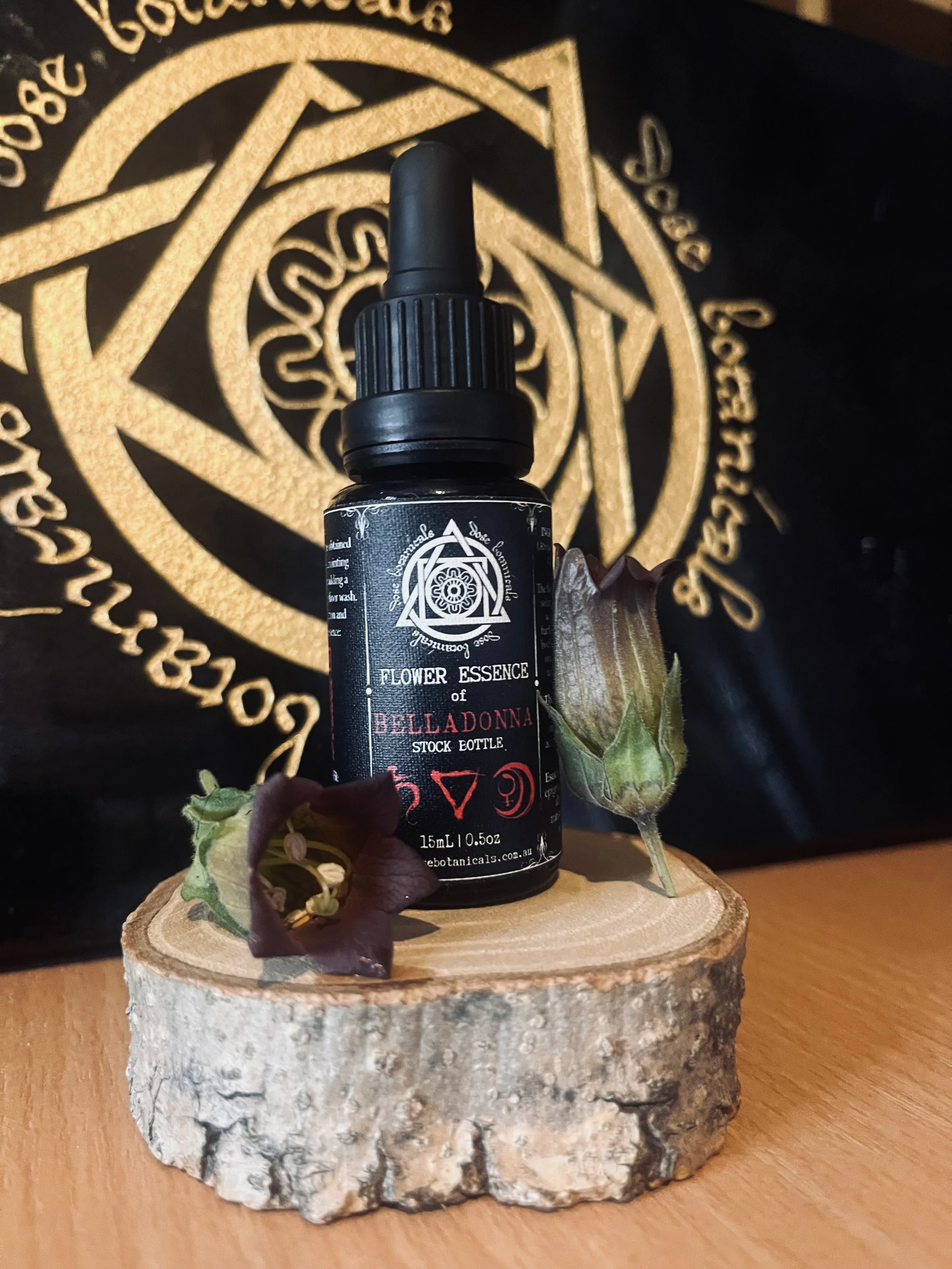 Image 3 of 4
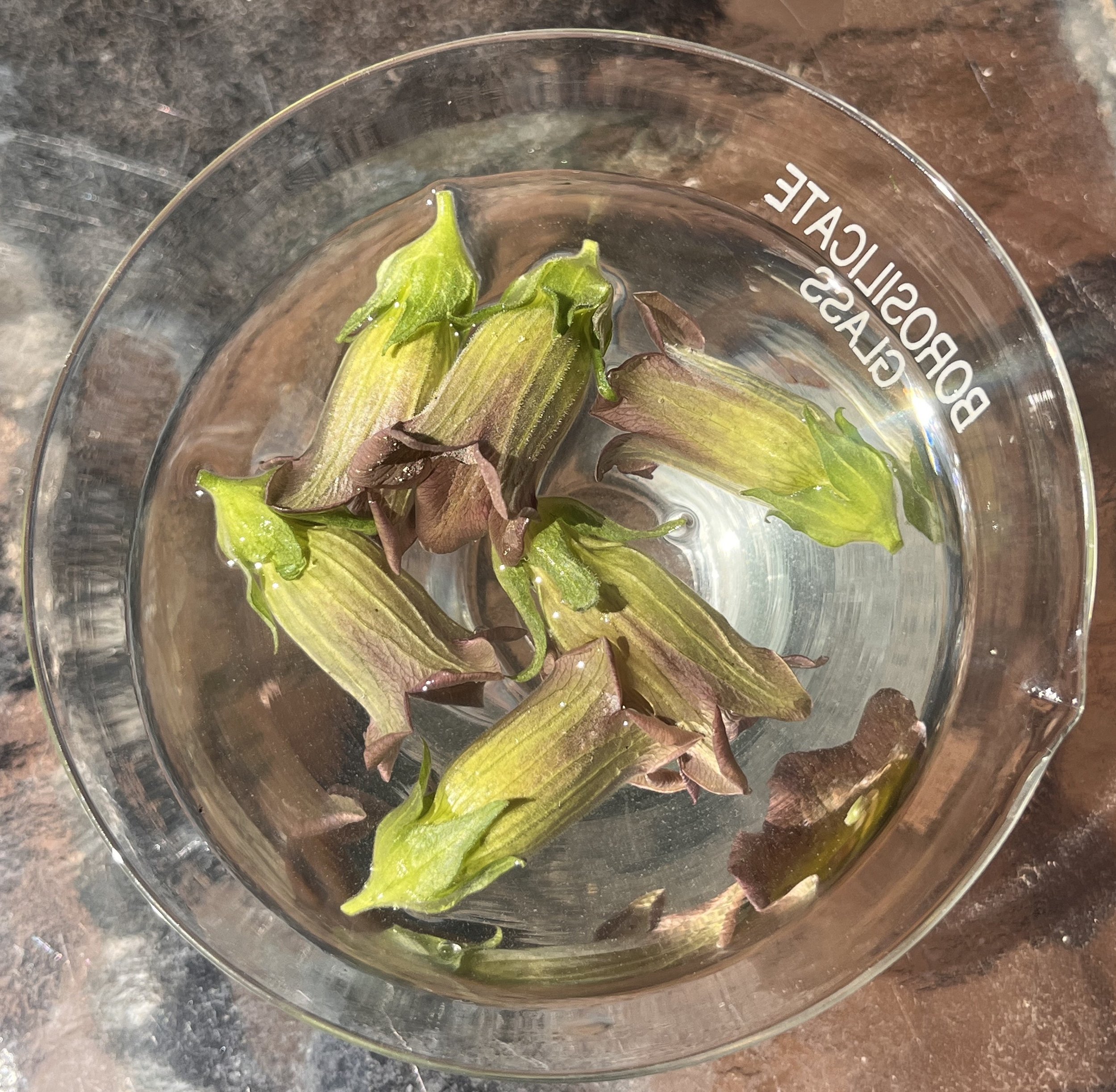 Image 4 of 4