Safe for ingestion: It should be known that flower essences are a vibrational and not pharmacological extract, meaning none of the active (incl. psychotropic or alkaloidal) components are present.
𓇗
Black Henbane (Hyoscyamus niger) is a member of the Solanaceae (Nightshade) family with a rich history mostly throughout Europe and parts of Asia.
The medicinal use of henbane dates back to the ancient periods and was much-admired by Dioscorides (1st century C.E.), who used it to induce sleep and relieve pains, internally & externally. There is speculation that shamanic and ritual use date as far back as the Paleolithic period when paleoindians migrated from Asia into the Americas via the Bering strait, however they likely substituted the use of henbane for tobacco due to accessibility.
It was a sacred herb to the Celts, who knew it as ‘belinuntia’ or ‘beleno’, meaning plant of the sun god, Belenus. It is believed they would burn henbane as a fumigant in his honour. The Gauls used a decoction of henbane to poison their javelins. Druids and bards who inhaled the smoke were believed to be taken to the “Other World”, where they could communicate with Fae and other beings.
Some anthropologists believe henbane to be one of the most important ritual plants of Nordic peoples during the vast ‘Viking’ era, one reason being due to the discovery of henbane seeds found in an Iron Age gravesite excavation. The archaeological dig of the ancient gravesite in Fyrkat, Denmark yielded a significant artefact being a leather bag containing hundreds of henbane seeds worn by a deceased woman, likely a Nordic Vølve (seer).
During the Middle Ages and the early modern period of Europe, henbane was associated with witchcraft and magic, in particular with oracles and love magic.
In Greek mythology, it is believed the dead in Hades were adorned with crowns of henbane most likely because of henbane’s legitimate ability to make one forget oneself. It is also suspected that henbane under the name of ‘hyoskyamos’ was sacred to the goddess Persephone. One version of the legend tells us Persephone was kidnapped by Hades (Greek god of the Underworld) from the heavens as result of a promised marriage from her father, Zeus, but which was disputed by her mother, Demeter.
Henbane has been featured in divination rituals, weather magic and rain ceremonies, especially in ancient Scotland where it was discovered in a Neolithic burial ground – some believe the remnants are result of a henbane (Bilsenkraut) beer that was either drunk to transition the dying or by the mourners themselves.
𓇗
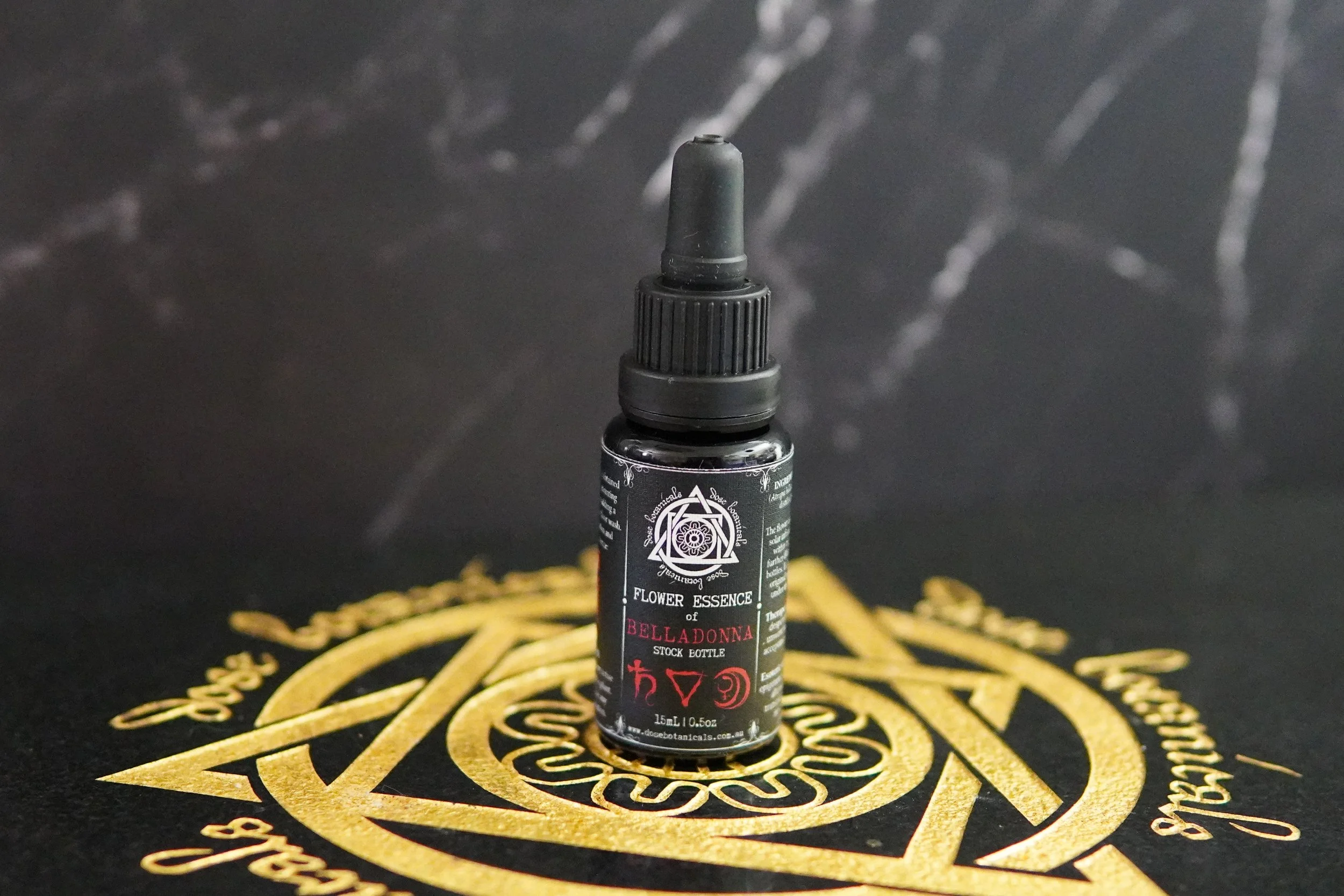
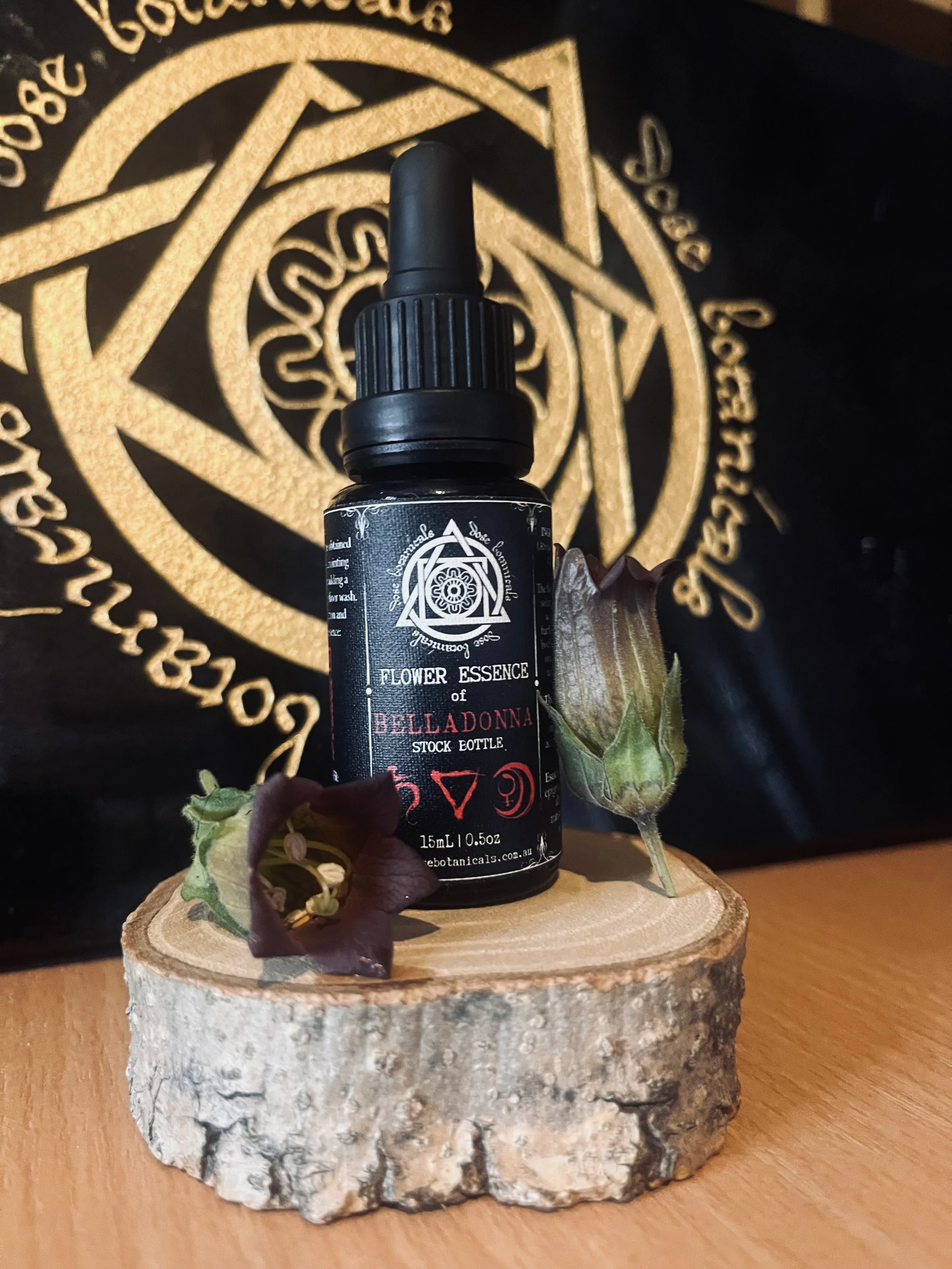
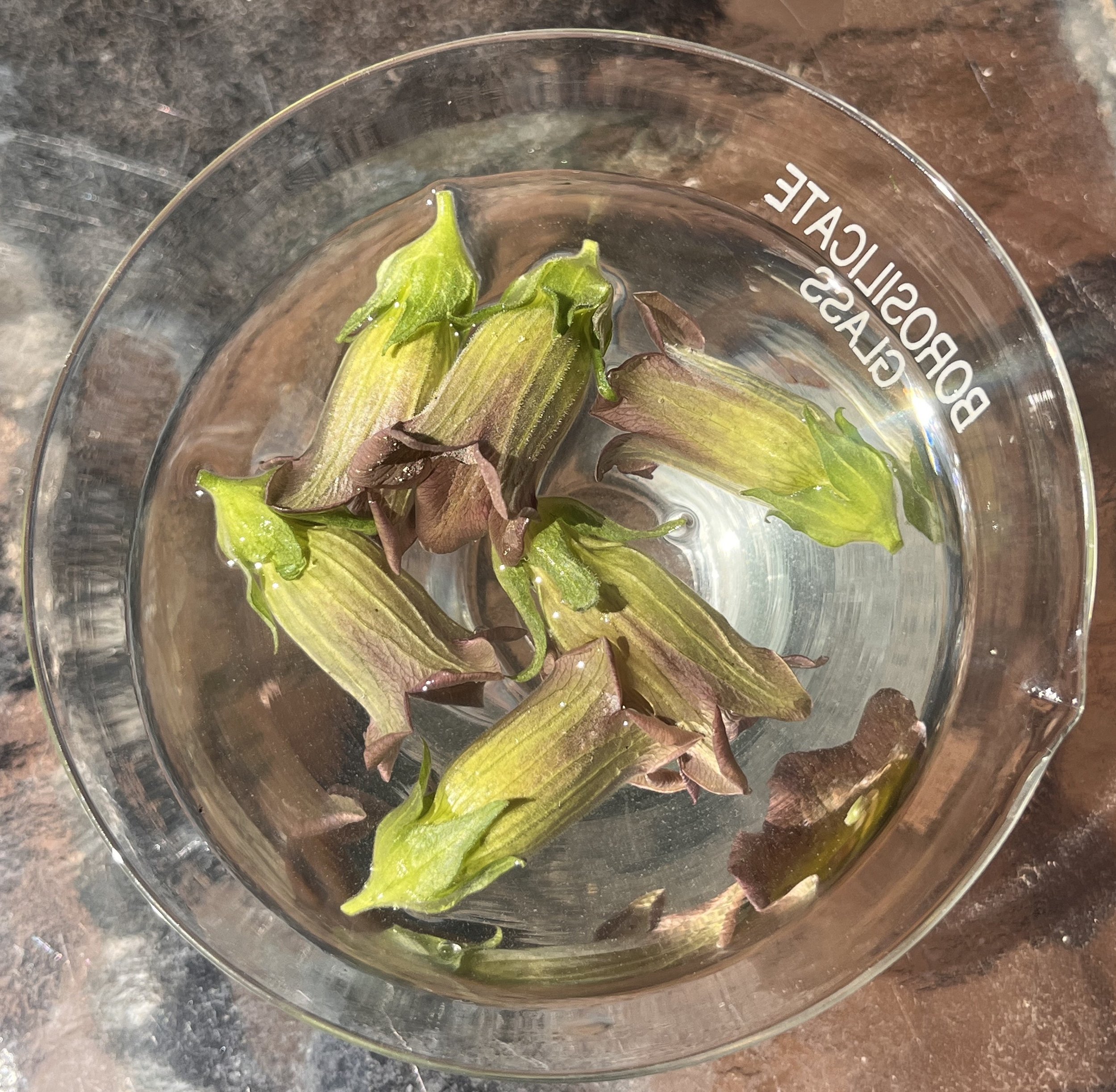
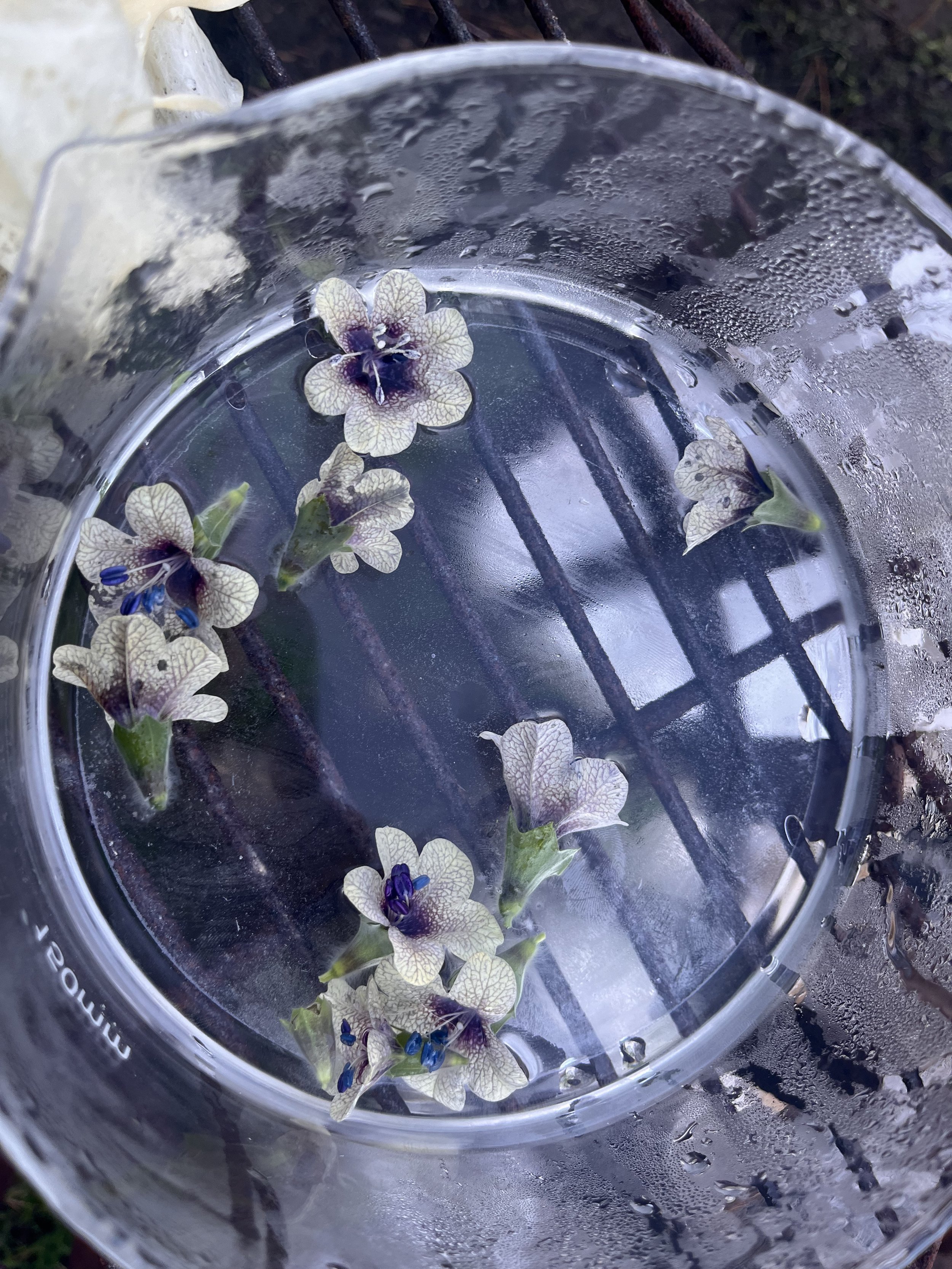
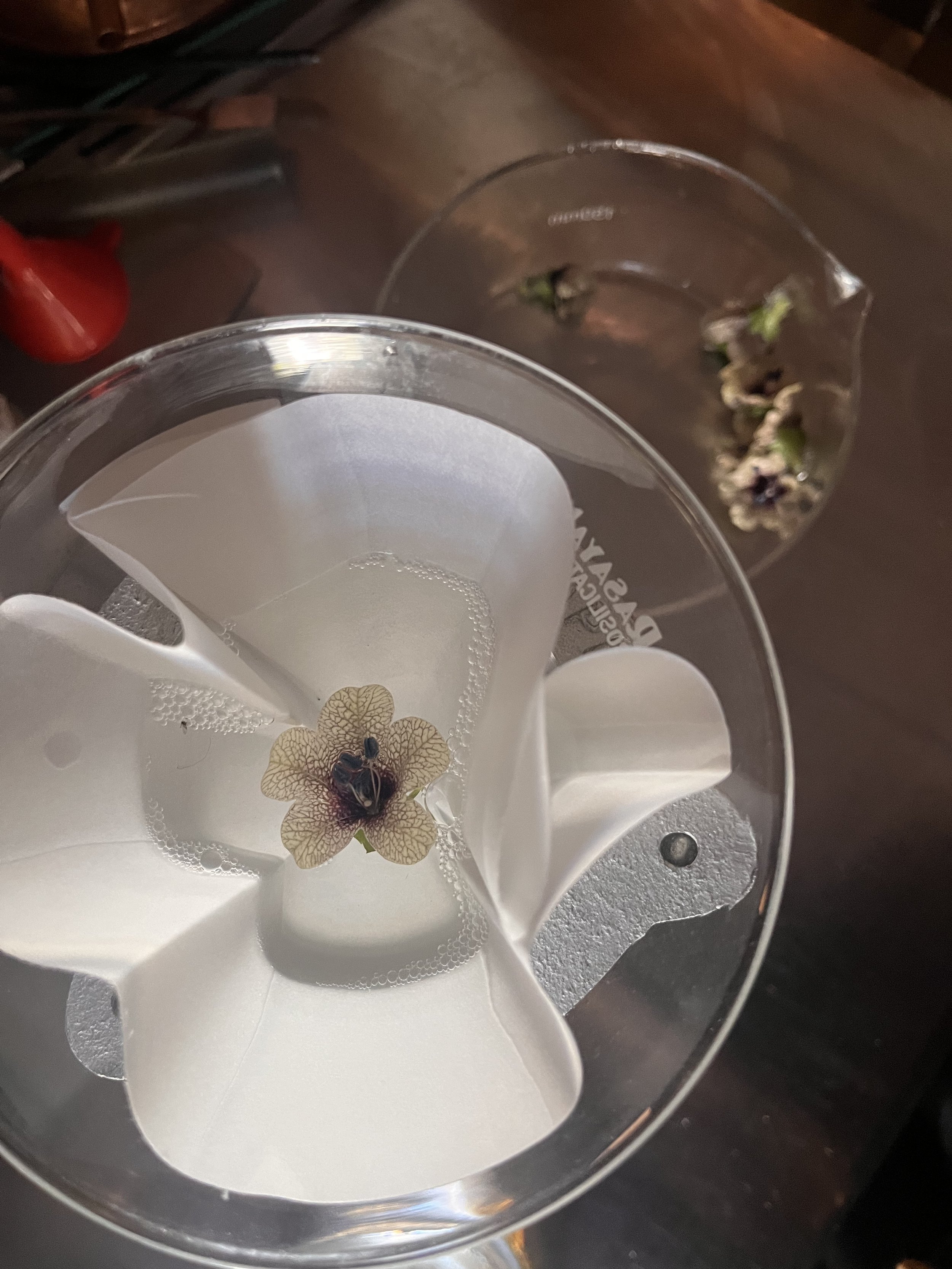
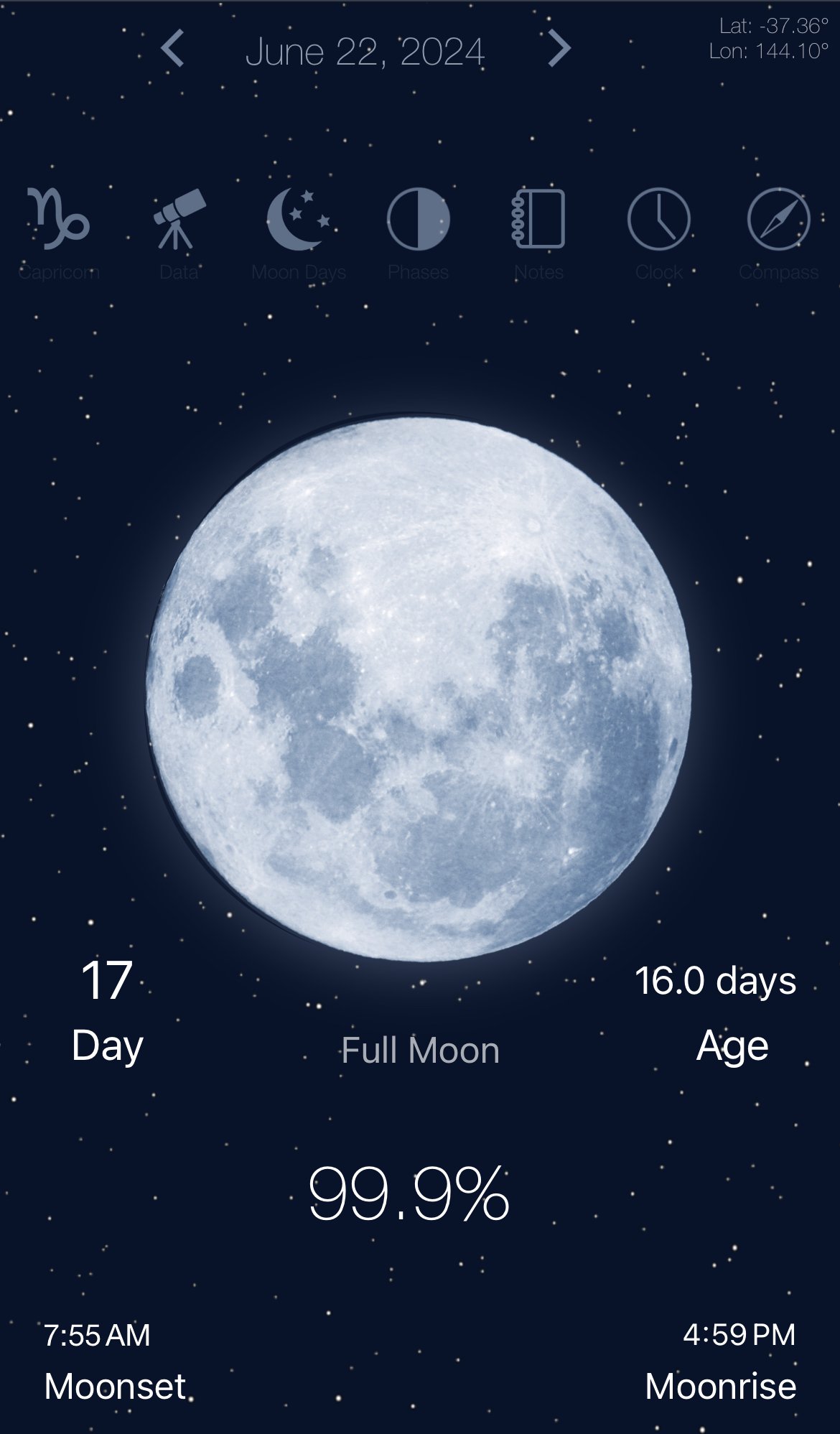
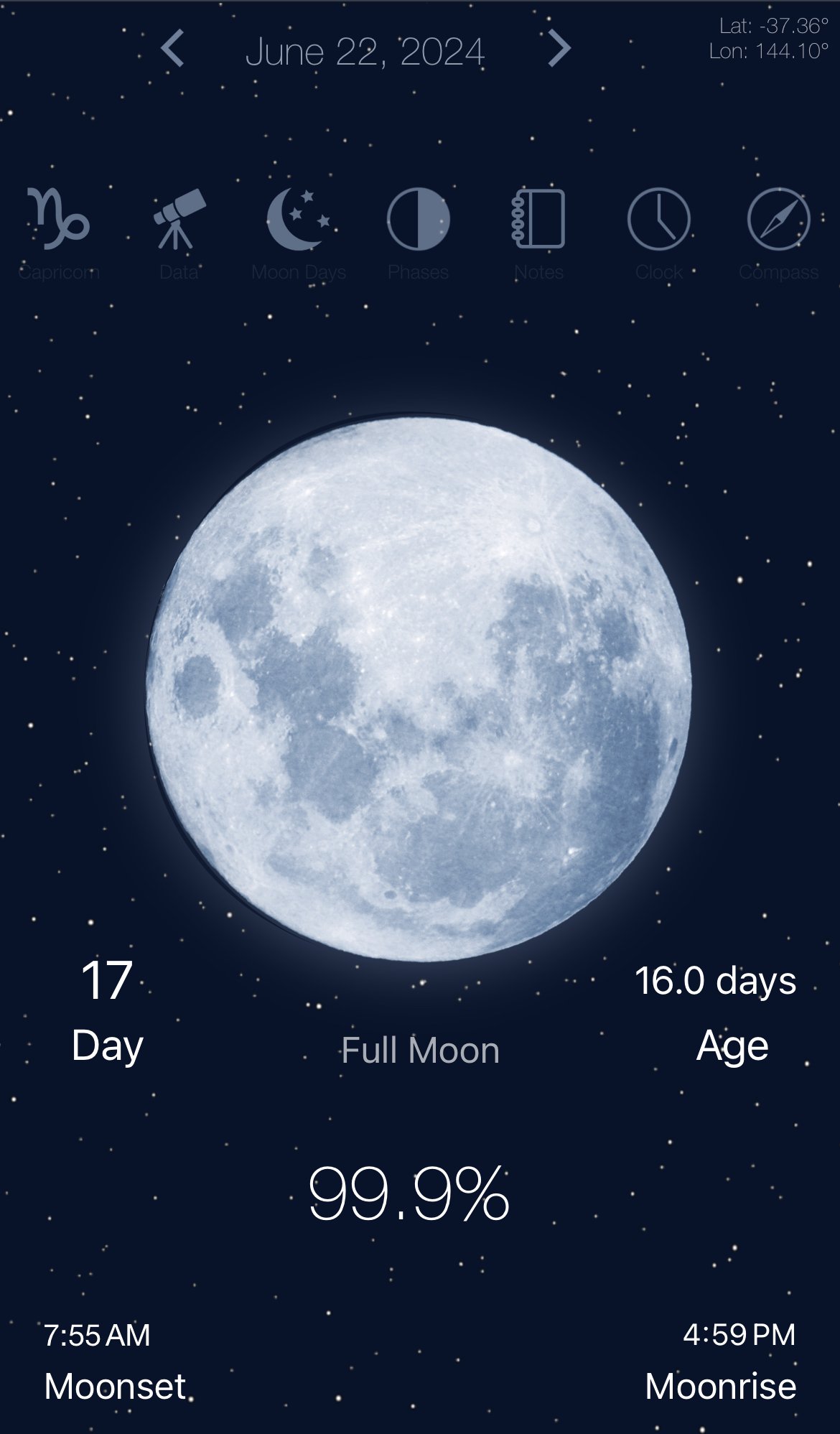
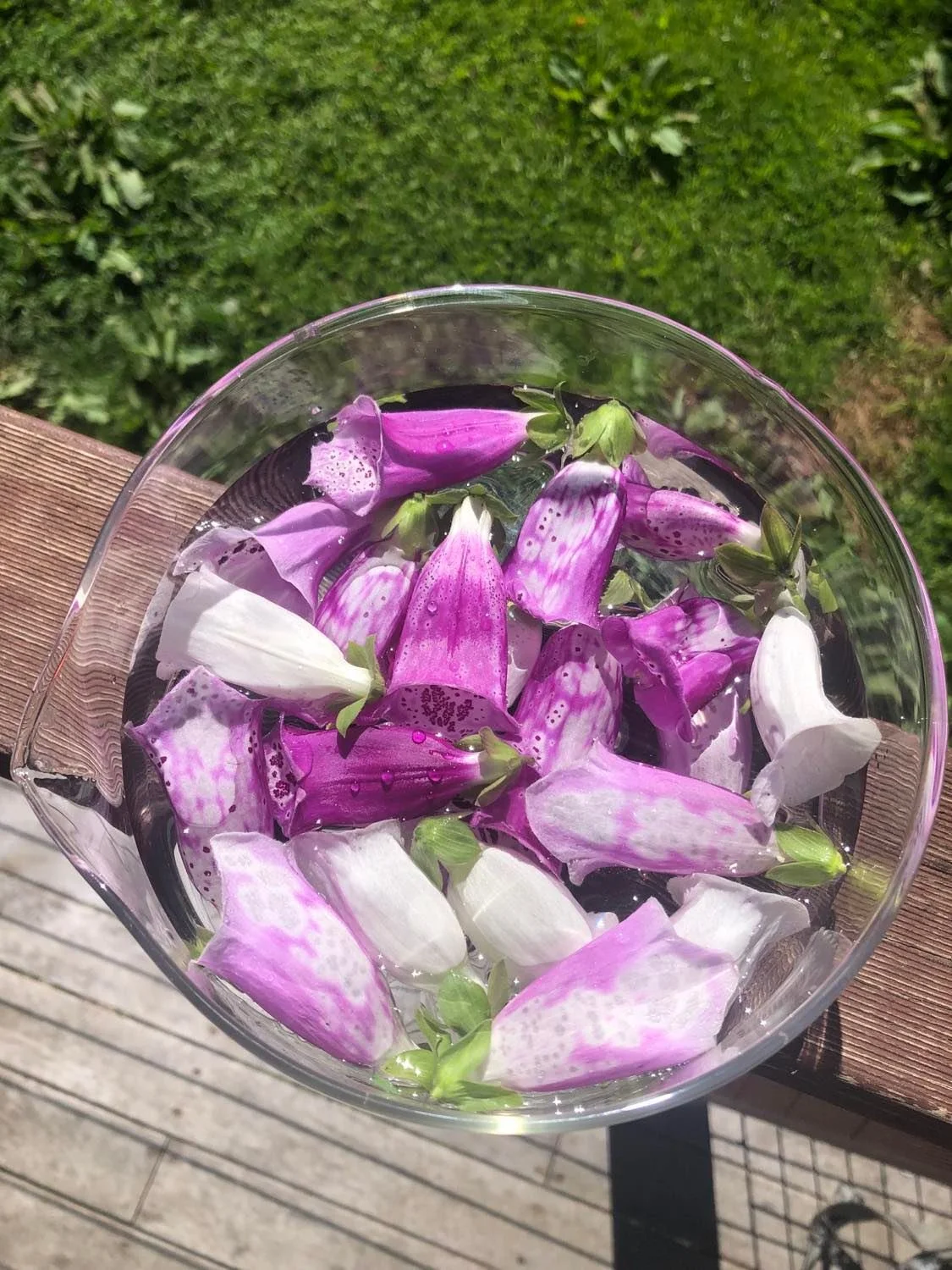
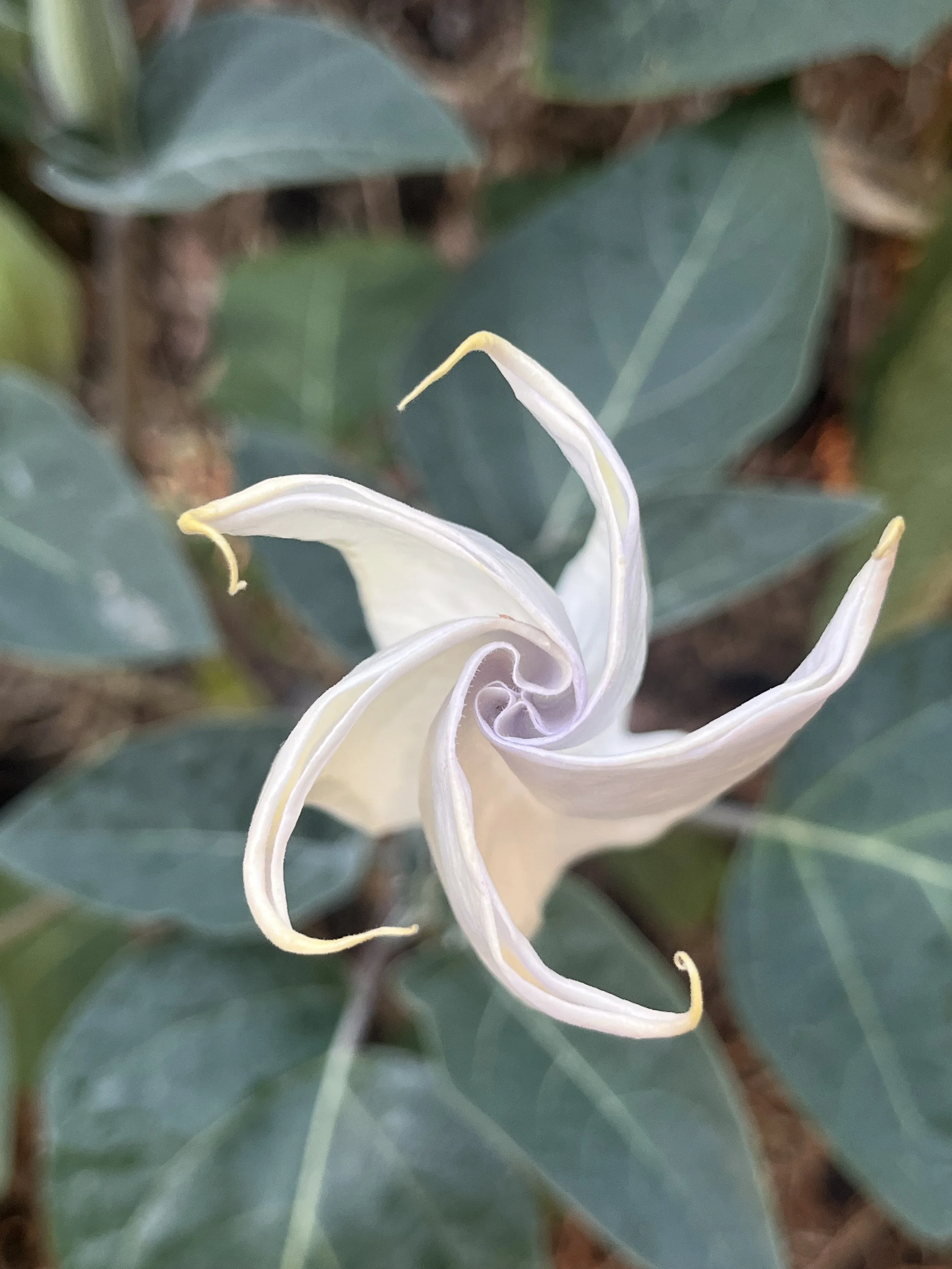
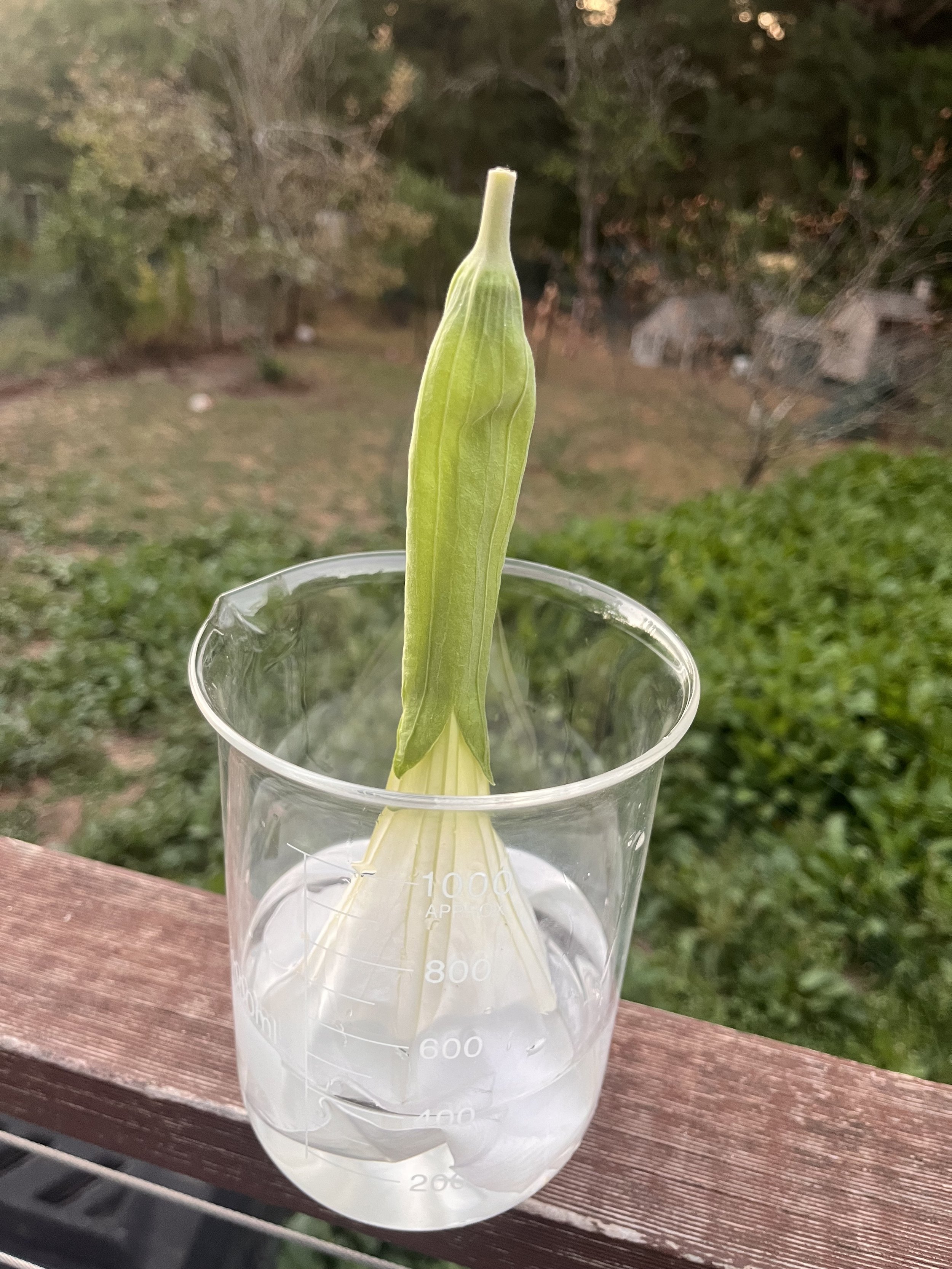
The flower essence of Henbane is made through solar infusion, imprinting the flower’s vibration within the water’s energetic matrix. This 15mL bottle is technically a stock bottle, meaning you can further dilute the stock essence to make dosage bottles [read more on Flower Essences, including their method of action, how to use them & how to make up a dosage bottle]. Each stock bottle contains 7 drops of the original mother essence of Henbane.
The virtues of Henbane can be obtained through ingesting the essence, anointing talismans, and candles, and/or adding a few drops to a spray/hydrosol or floor wash.
𓇗
Planetary Correspondences: Saturn & Sun
Elemental Correspondences: Water & Fire
Energetics: Cold (4th degree) & Dry (1st degree)
General Uses: generational karmic patterns & contracts; boundary setting; cycles of chaos; trauma loops & struggling to let go; indecisiveness; fear of relapse & of the unknown
Esoteric Virtues: ancestral work; protection; banishing & unbinding charms; rainmaking rituals; inspiration; astral projection
𓇗
Ingredients: Mother essence of Black Henbane (Hyoscyamus niger) flower, filtered rain & spring water, distilled grape wine, Celtic sea salt (Sel gris)
Bottled in Miron Glass
DOSE BOTANICALS DOES NOT MAKE ANY MEDICAL OR THERAPEUTIC CLAIM WITHOUT CONSULTATION. THIS INFORMATION IS FOR EDUCATIONAL PURPOSES ONLY.
Safe for ingestion: It should be known that flower essences are a vibrational and not pharmacological extract, meaning none of the active (incl. psychotropic or alkaloidal) components are present.
𓇗
Black Henbane (Hyoscyamus niger) is a member of the Solanaceae (Nightshade) family with a rich history mostly throughout Europe and parts of Asia.
The medicinal use of henbane dates back to the ancient periods and was much-admired by Dioscorides (1st century C.E.), who used it to induce sleep and relieve pains, internally & externally. There is speculation that shamanic and ritual use date as far back as the Paleolithic period when paleoindians migrated from Asia into the Americas via the Bering strait, however they likely substituted the use of henbane for tobacco due to accessibility.
It was a sacred herb to the Celts, who knew it as ‘belinuntia’ or ‘beleno’, meaning plant of the sun god, Belenus. It is believed they would burn henbane as a fumigant in his honour. The Gauls used a decoction of henbane to poison their javelins. Druids and bards who inhaled the smoke were believed to be taken to the “Other World”, where they could communicate with Fae and other beings.
Some anthropologists believe henbane to be one of the most important ritual plants of Nordic peoples during the vast ‘Viking’ era, one reason being due to the discovery of henbane seeds found in an Iron Age gravesite excavation. The archaeological dig of the ancient gravesite in Fyrkat, Denmark yielded a significant artefact being a leather bag containing hundreds of henbane seeds worn by a deceased woman, likely a Nordic Vølve (seer).
During the Middle Ages and the early modern period of Europe, henbane was associated with witchcraft and magic, in particular with oracles and love magic.
In Greek mythology, it is believed the dead in Hades were adorned with crowns of henbane most likely because of henbane’s legitimate ability to make one forget oneself. It is also suspected that henbane under the name of ‘hyoskyamos’ was sacred to the goddess Persephone. One version of the legend tells us Persephone was kidnapped by Hades (Greek god of the Underworld) from the heavens as result of a promised marriage from her father, Zeus, but which was disputed by her mother, Demeter.
Henbane has been featured in divination rituals, weather magic and rain ceremonies, especially in ancient Scotland where it was discovered in a Neolithic burial ground – some believe the remnants are result of a henbane (Bilsenkraut) beer that was either drunk to transition the dying or by the mourners themselves.
𓇗
The flower essence of Henbane is made through solar infusion, imprinting the flower’s vibration within the water’s energetic matrix. This 15mL bottle is technically a stock bottle, meaning you can further dilute the stock essence to make dosage bottles [read more on Flower Essences, including their method of action, how to use them & how to make up a dosage bottle]. Each stock bottle contains 7 drops of the original mother essence of Henbane.
The virtues of Henbane can be obtained through ingesting the essence, anointing talismans, and candles, and/or adding a few drops to a spray/hydrosol or floor wash.
𓇗
Planetary Correspondences: Saturn & Sun
Elemental Correspondences: Water & Fire
Energetics: Cold (4th degree) & Dry (1st degree)
General Uses: generational karmic patterns & contracts; boundary setting; cycles of chaos; trauma loops & struggling to let go; indecisiveness; fear of relapse & of the unknown
Esoteric Virtues: ancestral work; protection; banishing & unbinding charms; rainmaking rituals; inspiration; astral projection
𓇗
Ingredients: Mother essence of Black Henbane (Hyoscyamus niger) flower, filtered rain & spring water, distilled grape wine, Celtic sea salt (Sel gris)
Bottled in Miron Glass
DOSE BOTANICALS DOES NOT MAKE ANY MEDICAL OR THERAPEUTIC CLAIM WITHOUT CONSULTATION. THIS INFORMATION IS FOR EDUCATIONAL PURPOSES ONLY.
 Image 1 of 2
 Image 2 of 2